
Product Updates
March Product Release: Elevating Your E-commerce Experience
March brings exciting developments including enhanced Shopify shipping label cost calculation, comprehensive analytics, and simplified BigCommerce sales tax reporting.
Putting all your eggs in one basket is fine if you're the Easter Bunny. But when it comes to running your ecommerce business? Not so much. Here's why and how to go multichannel.

Putting all your eggs in one basket is fine if you're the Easter Bunny. But when it comes to running your ecommerce business? Not so much. Nowadays, the smart move is going multichannel. Here's why and how.
First of all, business on any given ecommerce platform is going to ebb and flow over time. It's just the nature of the retail beast. If you sell on multiple platforms, chances are your sales will remain steadier overall.
Furthermore, if you sell through only one channel, your business is entirely dependent on that channel. If something goes wrong — for example, an eBay site glitch — there goes your entire revenue stream. And if your one marketplace changes their rules, as happens on eBay at least twice a year, it could take you days or even weeks to get compliant and back up to speed. Time is money in ecommerce, so delays are costly!
Selling via a single channel also means that you reach only a limited segment of the market, i.e., potential customers for your products. By selling via more than one ecommerce platform, you're going to reach a wider audience. That alone is going to boost sales and grow your brand.
In fact, a recent study showed that retailers who sell on just two separate online platforms saw a 190% increase in revenue over those selling in only one marketplace. Those who sold from their own website and added a marketplace channel increased revenue by an average of 38%, while adding two marketplace channels bumped it up by 120%!
It's just simple common-sense math. Not all shopping journeys follow the same path; some people start with a Google search, while others go straight to Amazon or eBay. Buyers also are not necessarily loyal to a single channel. Chances are they'll check more than one before they make a purchase. The more ways and places that would-be customers can find you, the more opportunities they'll have to buy from you.
In addition, studies show that multi-channel shoppers — those who interact with your company through more than one channel — buy more overall than those who engage with your company using only a single channel.
Finally, especially if you sell only on your own website, driving traffic can be a challenge (and expensive, too). Marketplace sites have built-in traffic. Many shoppers prefer marketplaces because they offer conveniences that a single-merchant site cannot.
So now you're sold on the idea of taking your ecommerce business multichannel. But where to begin?
Start by prioritizing channels. Not all marketplaces will work equally well for your particular brand. You've got to consider each available option from two sides:
For example, if you sell handmade and/or vintage goods, you probably want to be on Etsy. If speed of delivery is your top priority, consider Amazon. For a marketplace that meets all of the above criteria, eBay is likely to be your best bet.
Look at the demographics for each marketplace as well as their terms of service. Each channel you select should work for your business model, industry, and target market.
At the same time, it's important to realize and prepare for the fact that whatever new channel(s) you decide to add, you're going to have to meet certain logistical challenges. The most obvious and important of these is keeping your inventory synced up across channels. More opportunities to make sales means more chances to over-sell or find yourself short-stocked.
Don't even think of trying to manually remove each item that sells on one ecommerce platform from all the other platforms where it's listed. That doesn't even work well for casual sellers!
No matter how small or hobbyish your business may seem to you, it is still a business. So you need to handle it accordingly. Find a multichannel selling tool that will enable you to manage your business from a single centralized location — from listing to shipping and fulfillment to managing customer relations.
Remember: More sales means more packages to be shipped in an appropriately timely fashion — not to mention more returns to process — while more customers means more potential problems to resolve plus a general increase in the volume of customer communications.
What advantages and benefits can you expect to reap by going multichannel with your ecommerce business? Let's look at what your ecommerce peers recently had to say:
Now stop running your ecommerce business like the Easter Bunny. Go multichannel — the way your customers are already shopping!
This powerful feature expands your analytical capabilities, allowing you to create custom metrics that align perfectly with your business objectives.
Access this feature through the Analytics section of your PayHelm dashboard. Our intuitive interface makes it easy to create and deploy custom calculations.
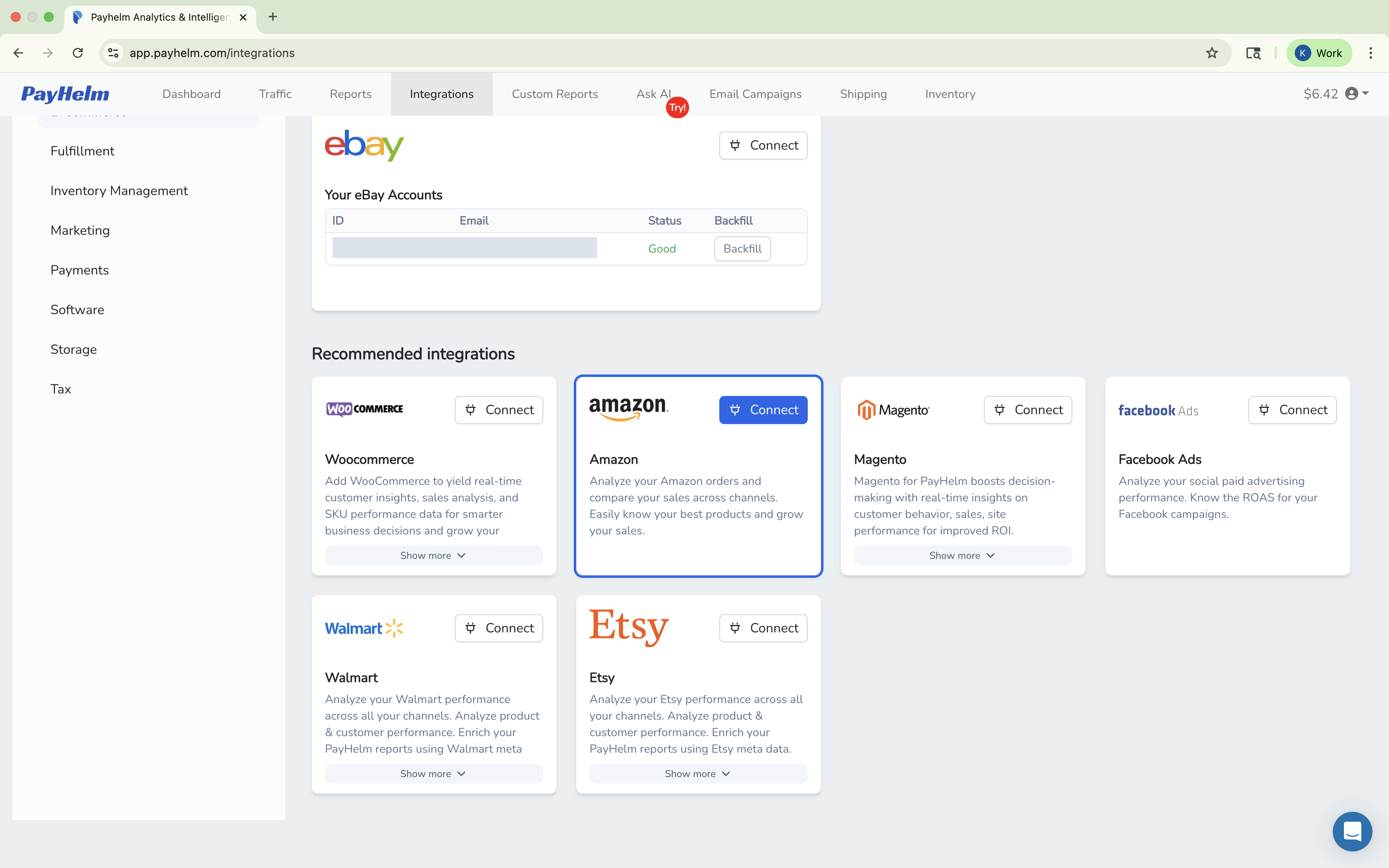
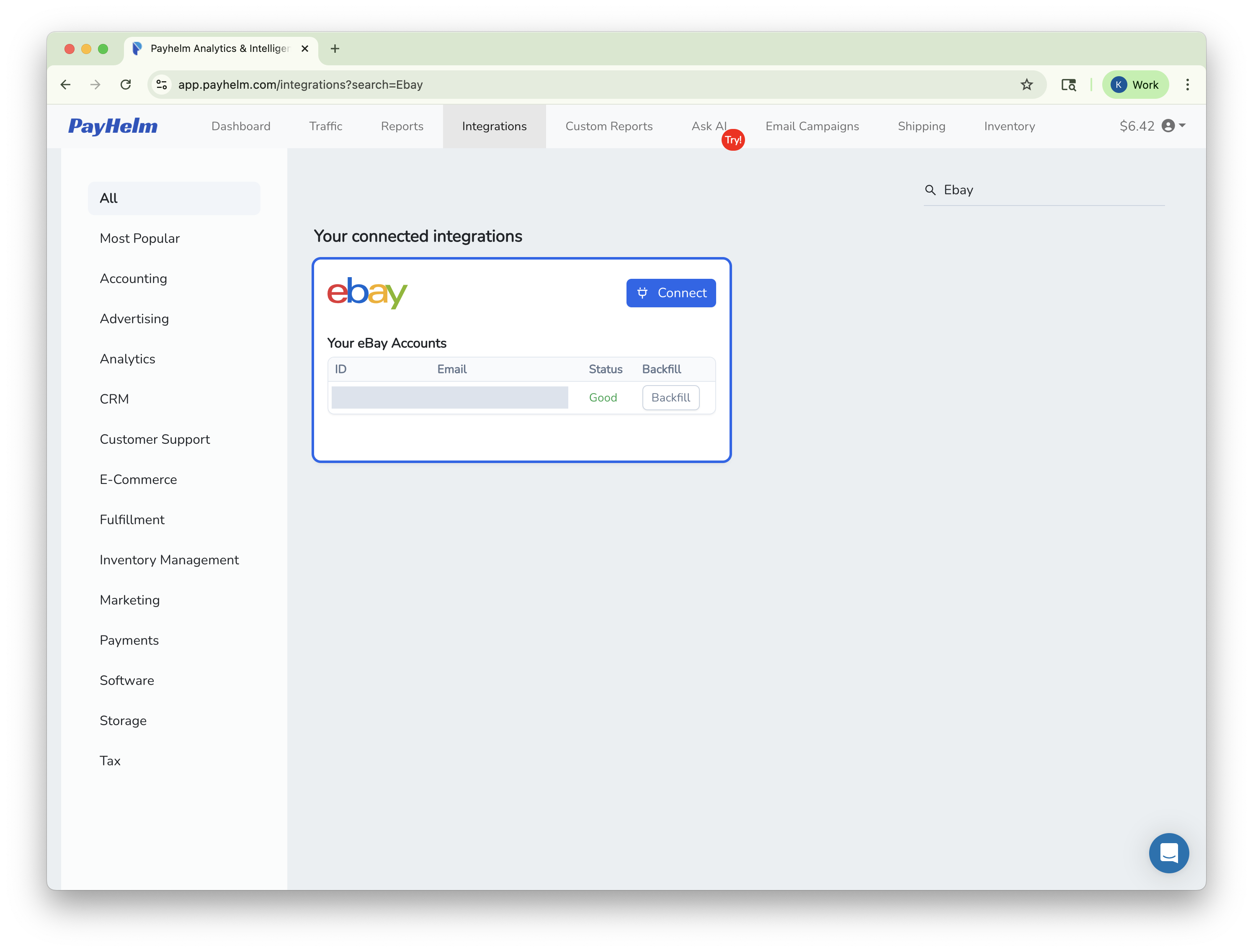
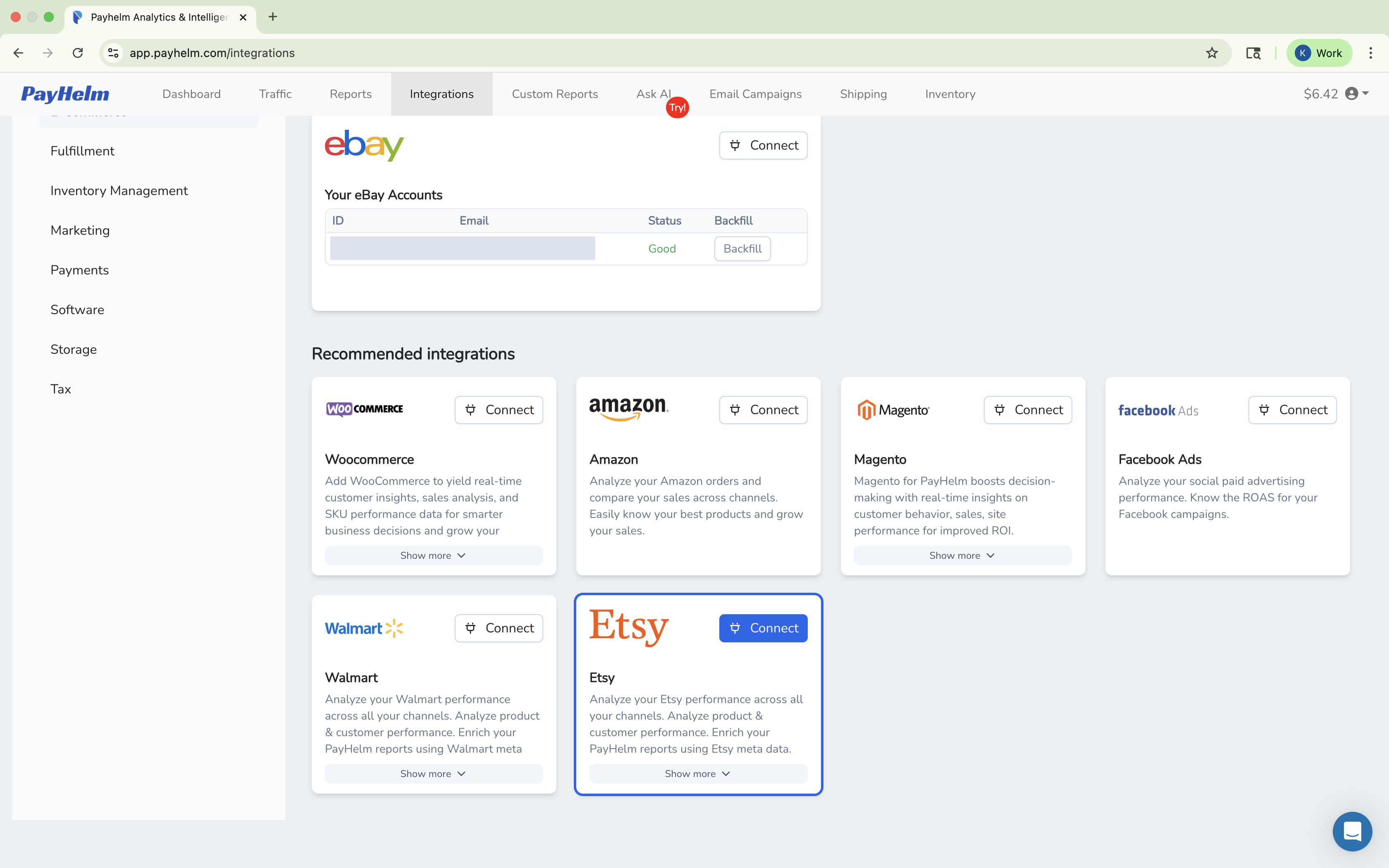
Connect these platforms with PayHelm to get unified analytics and insights