The AI Analytics Revolution: How Smart Ecommerce Reporting Will 10x Your Growth in 2026
The ecommerce landscape is experiencing a seismic shift. By 2026, artificial intelligence will fundamentally transform how businesses measure, understand, and optimize their performance across Shopify analytics (Source: Shopify), BigCommerce analytics (Source: BigCommerce), WooCommerce analytics (Source: WooCommerce), and every other platform. This isn't incremental improvement: it's a complete reimagining of what ecommerce reporting means.
Traditional reporting tells you what happened last week or last month. AI-powered analytics predict what will happen tomorrow and automatically optimize for it. The numbers speak volumes: AI-driven ecommerce analytics and personalization lift conversion rates and revenue (Source: Magnet). For businesses still relying on basic Shopify reporting (Source: Shopify) or BigCommerce reporting (Source: BigCommerce), the gap between current performance and potential is staggering.
From Reactive Dashboards to Predictive Intelligence
Most ecommerce reporting platforms show you historical data: orders completed, traffic sources, conversion rates from last week. AI analytics flip this model entirely. Instead of asking "What happened?" the new question becomes "What should we do next?"

Real-time behavioral analysis processes millions of customer interactions simultaneously, identifying patterns that human analysts would never catch. When analyzing over 3 million shopper interactions, AI systems identify purchase intent signals with remarkable precision: shoppers who engage with AI assistants show higher click-through rates (Source: Magnet). These micro-signals enable businesses to intervene at exactly the right moment with precisely the right message or offer.
PayHelm's AI-powered platform exemplifies this transformation. Rather than waiting for monthly WooCommerce analytics (Source: WooCommerce) reports, businesses access continuous predictive insights that anticipate customer behavior before it occurs. The system incorporates weather patterns, social media sentiment, economic indicators, and competitive intelligence to forecast demand with unprecedented accuracy.
Hyper-Personalization Through Advanced Analytics
Traditional Amazon analytics (Source: Amazon Brand Analytics) or Shopify analytics (Source: Shopify) segment customers into broad categories: repeat buyers, high-value customers, geographic regions. AI analytics treat every customer as a unique segment while maintaining operational efficiency across millions of shoppers.
Context-aware content optimization demonstrates this power. When AI identifies that a specific shopper values battery life over design aesthetics, the system dynamically adjusts product descriptions to emphasize practical benefits rather than technical specifications. This contextual personalization drives significant conversion lifts (Source: Magnet).
The sophistication extends beyond content to pricing and promotion strategies. AI-powered analytics determine optimal pricing for individual customers based on purchase history, browsing behavior, and price sensitivity. This dynamic approach maximizes both conversion and margin simultaneously: a capability impossible with standard BigCommerce reporting or WooCommerce reporting tools.
Operational Intelligence That Drives Efficiency
Backend operations receive equal transformation through AI analytics. Intelligent inventory management uses predictive models to optimize stock levels across multiple locations, reducing both stockouts and excess inventory. The analytics forecast demand at the SKU level by region, automatically trigger restocking orders, and route shipments through cost-efficient carriers.

French retailer Carrefour deployed an AI-powered assistant to 125,000 employees across eight countries, streamlining operations while accelerating service delivery (Source: RetailTechInnovationHub). This demonstrates how analytics-driven insights cascade throughout organizations to improve both efficiency and customer satisfaction.
By 2026, supply chain analytics powered by AI enable ecommerce brands to operate with logistical sophistication previously reserved for industry giants. Mid-size businesses achieve faster delivery times and reduced operational costs without massive infrastructure investments.
Multi-Platform Analytics Integration
The fragmented nature of modern ecommerce creates a critical challenge. Businesses sell across Shopify, Amazon, BigCommerce, social media, and direct channels: but most analytics platforms operate in isolation. Amazon reporting (Source: Amazon Brand Analytics) can't factor in your Google Ads spend. Shopify analytics (Source: Shopify) don't show how TikTok campaigns influence Amazon sales.
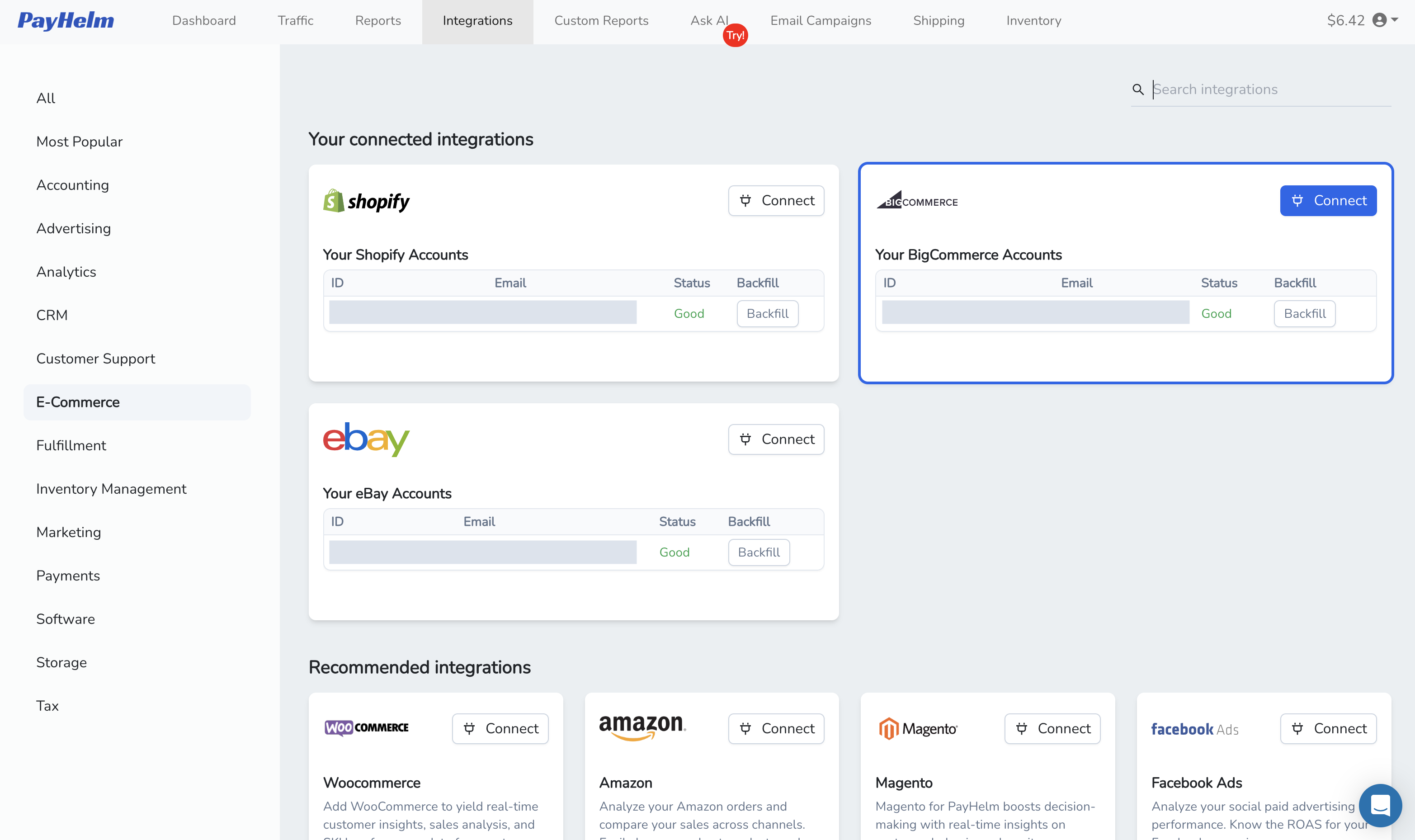
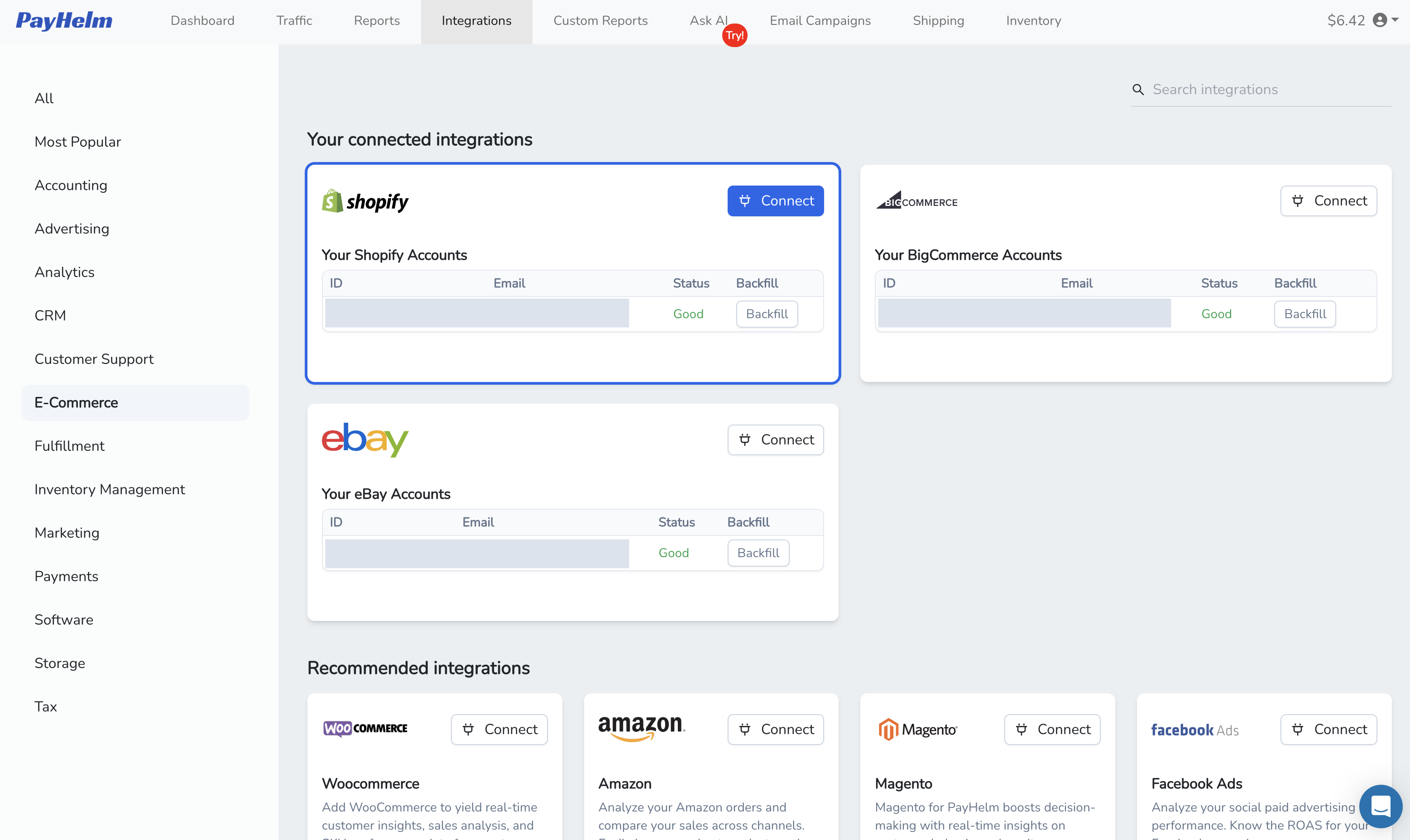
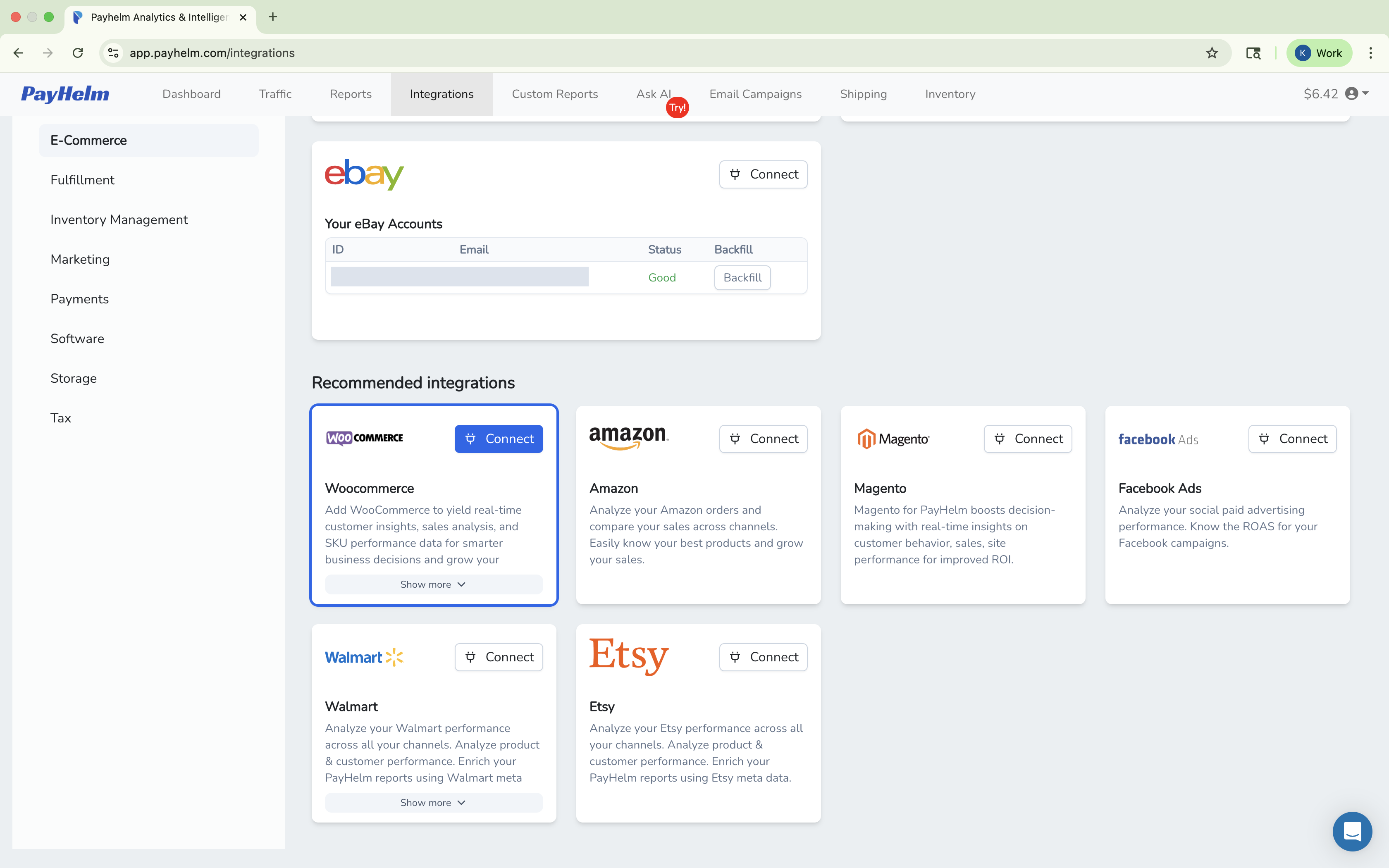
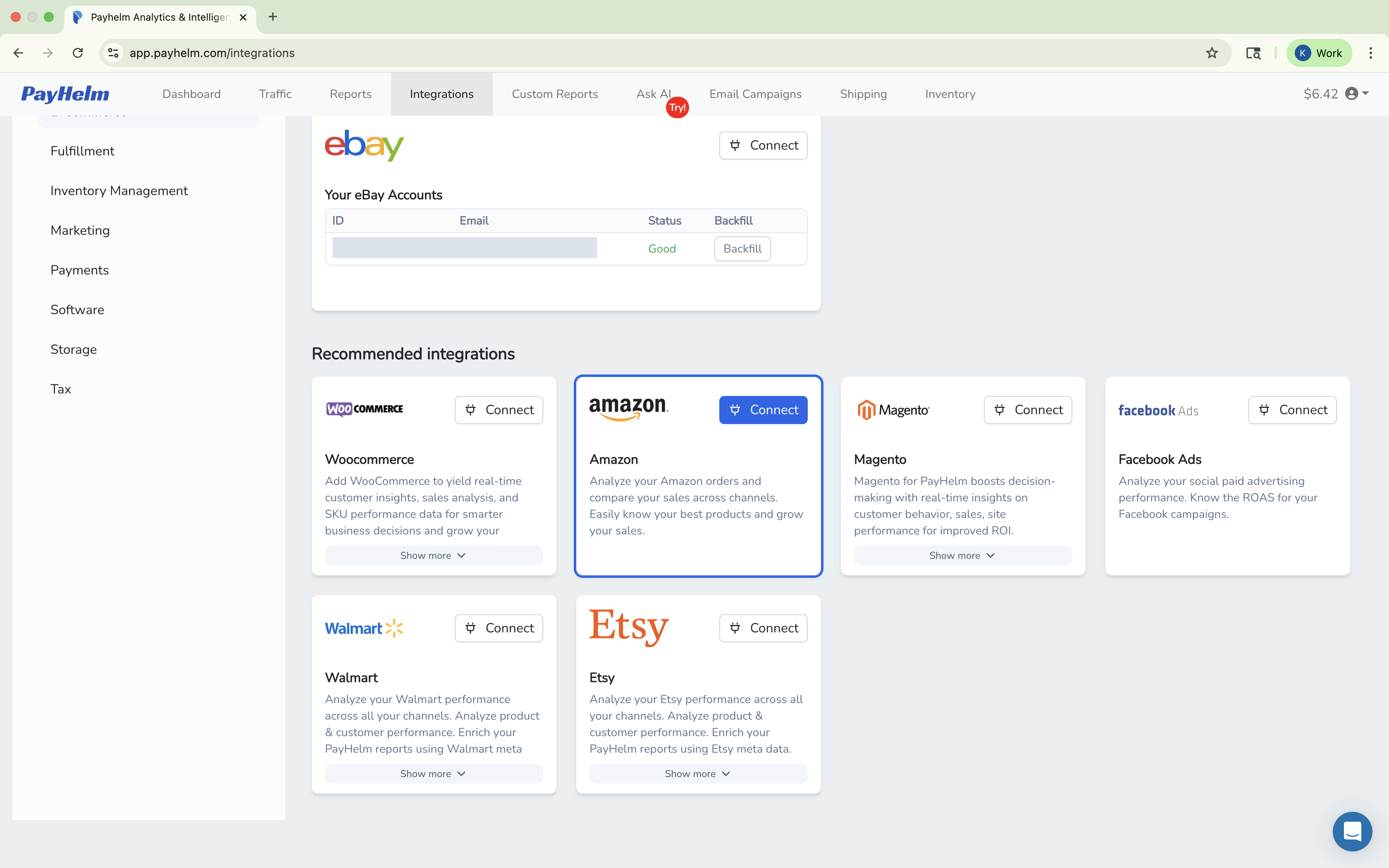
PayHelm's unified approach connects data from over 300 integrations into a single analytics engine (Source: PayHelm Integrations). This enables true cross-platform insights that answer questions like "What's my actual profit margin after all advertising costs?" or "Which products drive the highest lifetime value across all channels?"
The AI layer adds predictive power to this unified data. Rather than manually analyzing which campaigns perform best across platforms, the system automatically identifies high-performing patterns and scales them while reducing spend on underperforming channels.
The Validation Economy and Purchase Confidence
AI analytics reveal a critical insight about modern shopping behavior: customers increasingly use intelligent systems for purchase validation rather than discovery. Shoppers commonly use AI assistants for product specifications and usage guidance (Source: Magnet).
This behavior pattern fundamentally changes how analytics should be designed. Rather than focusing solely on top-of-funnel metrics like traffic and impressions, analytics must prioritize confidence-building metrics that track how effectively businesses answer validation questions.

When shoppers ask validation questions: "Can I use this outdoors?" or "What is the battery life?": they're on the verge of purchasing. Leading retailers report strong satisfaction with AI assistant responses, and when validation questions are answered effectively, conversion follows naturally (Source: Magnet).
B2B Commerce Analytics Transformation
While B2C ecommerce has led AI adoption, B2B commerce represents a significant opportunity for analytics-driven growth in 2026. Gartner highlights rapid AI-assisted transformation in B2B commerce by 2026, reshaping buyer-seller interactions and digital sales processes (Source: Digital Commerce 360).
B2B-specific analytics track predictive reordering patterns, account-level personalization effectiveness, buyer scoring and churn prediction, and bulk ordering efficiency. The analytics identify which wholesale buyers are at risk of churning based on ordering pattern changes and competitive pricing intelligence: then automatically trigger retention campaigns before relationships deteriorate.
This represents massive untapped opportunity. B2B ecommerce transactions involve higher order values and longer-term customer relationships, meaning analytics-driven improvements yield exponential returns compared to B2C optimization.
Automated Content Intelligence
AI analytics now extend into content performance measurement and optimization. Rather than manually analyzing which product descriptions convert best, AI systems continuously generate, test, and refine content across multiple channels. The analytics engine measures performance across email, social media, paid search, and organic search, then automatically rewrites underperforming content.
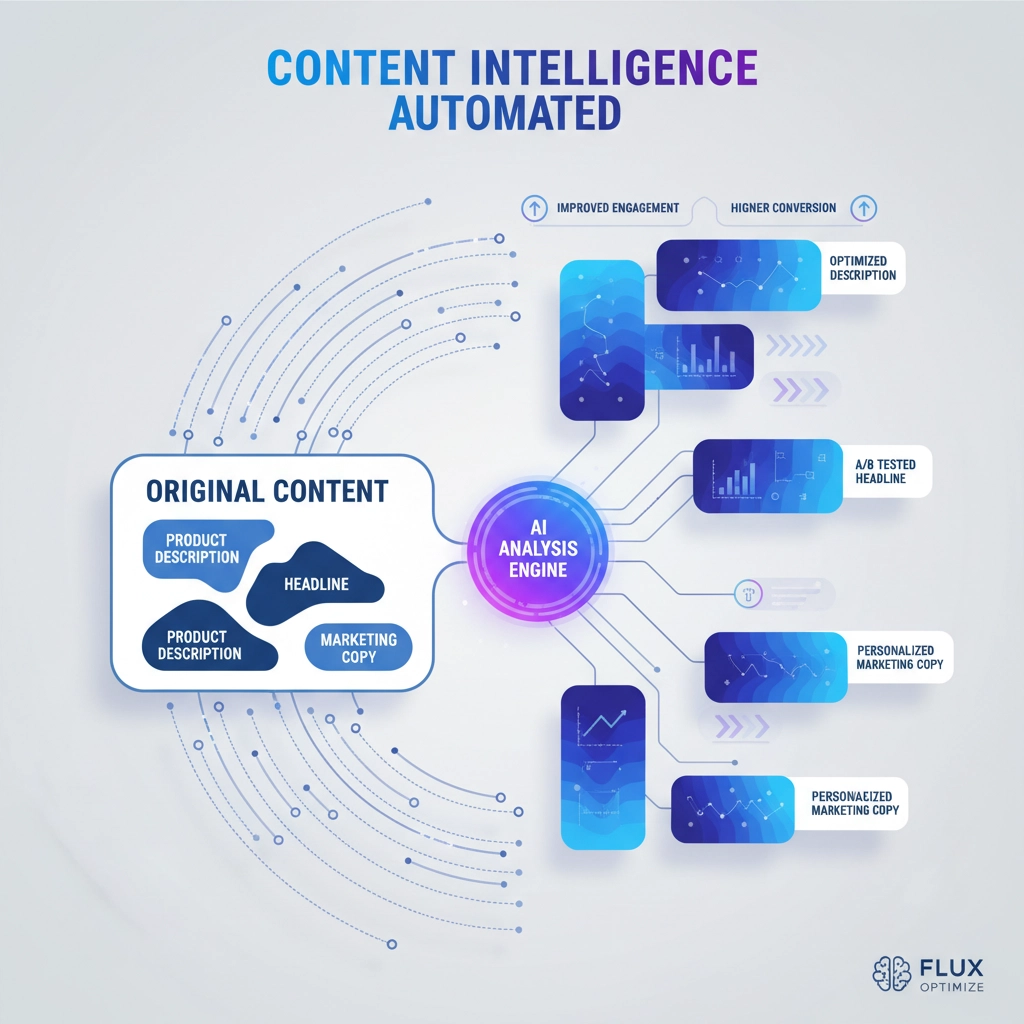
This creates a self-optimizing content ecosystem where analytics and execution merge. The system detects which headlines drive clicks, which product descriptions drive conversions, and which calls-to-action prompt engagement: then automatically implements winning variations without human intervention.
The PayHelm Advantage in AI Analytics
PayHelm positions businesses at the forefront of this analytics revolution. Unlike basic Shopify reporting or Amazon analytics that operate in isolation, PayHelm's AI-powered platform provides unified insights across all sales channels and marketing touchpoints.
The platform's machine learning algorithms continuously analyze performance patterns, automatically identify optimization opportunities, and implement improvements at machine speed. Businesses that previously spent weeks analyzing monthly reports now receive real-time recommendations that drive immediate results (Source: PayHelm Benefits).
Key differentiators include predictive demand forecasting that prevents stockouts, automated price optimization that maximizes margins, cross-platform attribution that reveals true ROI, and real-time alert systems that notify teams of critical changes instantly.
The Strategic Imperative for 2026
The competitive advantage in 2026 ecommerce doesn't come from having data: every business has abundant data. The advantage comes from AI-powered analytics that turn data into action at machine speed. Customer acquisition costs continue rising while traditional marketing channels lose effectiveness, making analytics-driven optimization essential for survival.
Businesses that master AI-driven analytics operate in a fundamentally different paradigm than competitors relying on traditional ecommerce reporting. They predict customer needs before customers articulate them, optimize operations in real-time rather than quarterly, and scale personalization to millions of individual shoppers simultaneously.
The "10x growth" promised isn't hyperbole: it's the natural result of making thousands of optimized decisions daily rather than dozens of manual adjustments monthly. The analytics revolution reshapes which ecommerce businesses thrive and which struggle to keep pace.
Ready to unlock AI-powered insights that drive exponential growth? Discover how PayHelm transforms your ecommerce analytics from reactive reporting to predictive intelligence. Start your transformation today and experience the future of ecommerce analytics.