What Are the Most Common Ecommerce Fulfillment Bottlenecks?
Inventory shortages, warehouse constraints, processing delays, and specific products that repeatedly take longer can all create bottlenecks. The same issue may affect one SKU or location rather than the entire business.
A bottleneck is not always the step with the most visible backlog. A picking delay may be caused by poor slotting, while a packing delay may come from missing materials or an order rule that sends work to the wrong location.
Start by defining the decision this section needs to support. Record the metric definitions, comparison window, and owner before drawing a conclusion. That small amount of discipline makes the analysis easier to repeat and easier for another teammate to trust. It also gives the team a clear standard for deciding whether the next review shows improvement.
How AI Finds Patterns in Fulfillment Delays
AI can compare thousands of completed and delayed orders, looking for shared characteristics. That historical view reveals patterns a daily dashboard can miss, such as a delay that appears every week after a promotion.
Pattern detection becomes stronger when the model compares similar periods and controls for order volume. It can examine whether the delay follows a promotion, a carrier cutoff, a warehouse shift, or a product mix change rather than treating every late order as independent.
The comparison becomes more useful when the underlying data is complete and consistently labeled. Check for missing records, delayed updates, and changes in platform definitions before treating movement as a business signal. When the inputs are clear, an operator can explain the result without rebuilding the analysis manually. This check is especially important when several connected platforms refresh on different schedules.
Identifying the Products, Locations, and Workflows Causing Bottlenecks
Segmenting results by SKU, product, fulfillment location, channel, and status moves the question from “Why are we slow?” to “Which part of the workflow is repeatedly slowing us down?”
This level of detail supports a focused operational experiment. A manager might move a fast-selling SKU, change an approval step, or rebalance labor, then compare the same segment before and after the change.
Break the result into the dimensions that can change the outcome, such as product, channel, location, customer group, or time period. A concentrated pattern usually points to a more actionable cause than a broad average. Keep the original total visible so the team can connect the detail back to business impact. The resulting view helps the right owner act without losing the context of the overall business.
How to Distinguish One-Time Fulfillment Problems From Recurring Issues
Frequency and duration matter. One bad day may require a quick intervention, while the same backlog every Friday points to a process change. Historical baselines help AI make that distinction.
Recurrence should be measured against a reasonable baseline, not assumed from one memorable incident. Look at how often the pattern appears, how long it lasts, and whether its size is large enough to affect service levels or revenue.
Interpret the finding as evidence to investigate, not as proof of a single cause. Compare it with a relevant control period and ask what changed in the workflow around the same time. This approach reduces false alarms while preserving the urgency of issues that affect customers or cash flow. It also makes the eventual recommendation easier to explain to stakeholders.
Using AI Insights to Improve Fulfillment Performance Over Time
Teams can establish baseline KPIs, change a workflow, and measure whether delays improve. Ongoing analysis shows whether a bottleneck disappeared, moved to another segment, or became worse.
Improvement is easier to verify when teams record the intervention alongside the KPI change. A trend that improves after a workflow update is useful evidence; a trend that only shifts to another warehouse shows that the root cause still needs attention.
Turn the insight into a small next step with a named owner and a date for review. The team can test a process change, adjust a planning assumption, or request better source data. Measuring the same section again shows whether the action solved the problem or only moved it elsewhere. A short feedback loop is more useful than a one-time report that is never revisited.
Finding Fulfillment Bottlenecks With PayHelm’s AI Agent
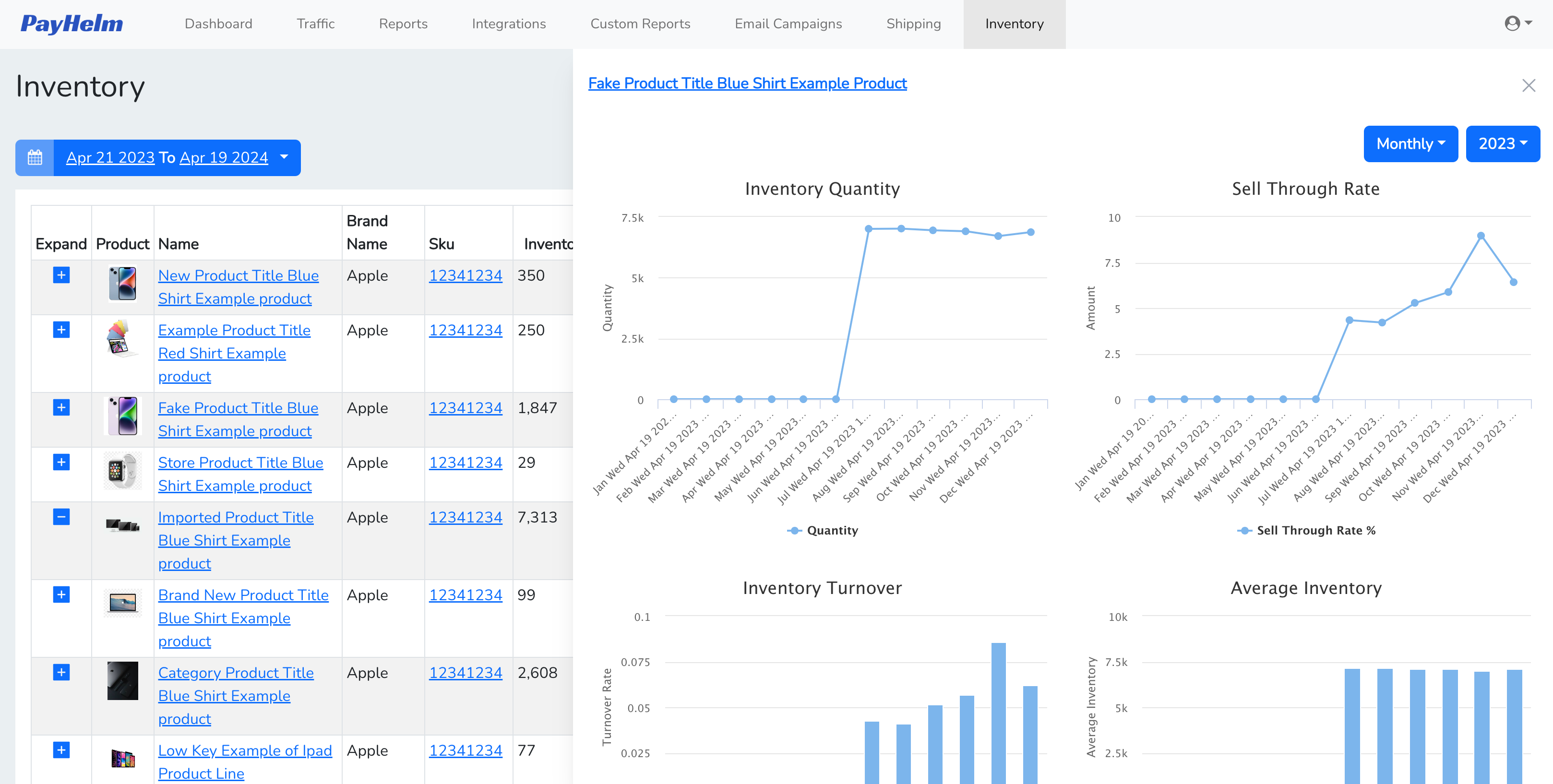
PayHelm can investigate historical orders by product, SKU, channel, store, status, and period. Ask, “Which products repeatedly account for late fulfillment?” Then use the answer to adjust inventory, staffing, or workflow. Teams can also review PayHelm’s inventory analytics to connect bottlenecks with stock availability.
Start broad, then ask follow-up questions that narrow the investigation to a measurable cause. PayHelm can help move from a recurring late-fulfillment pattern to the products, locations, and periods that should be reviewed by the operations team.
PayHelm is most useful when the question moves from a headline to a decision. Start with the broad result, ask a focused follow-up, and verify the supporting records before acting. That workflow keeps AI-generated analysis practical, transparent, and aligned with the operating team’s judgment. It gives the team a repeatable path from an observation to a responsible operational decision.