Managing an ecommerce business means constantly switching between Shopify analytics, Amazon reporting, Google Analytics, Facebook Ads Manager, and countless other platforms. This dashboard juggling act isn't just exhausting: it's actively damaging your business performance and decision-making capabilities.
The solution isn't learning to manage more tabs or hiring someone to manually compile reports. The answer is automated data consolidation that creates a single source of truth for all your ecommerce analytics and reporting needs.
The Hidden Cost of Dashboard Switching
Every minute your team spends switching between platforms, cross-referencing data, and manually creating reports is time stolen from strategic analysis and optimization. Research reveals that marketing teams waste nearly half their analytical resources on data preparation instead of generating actionable insights (Source: Marketing Land).
When your Shopify reporting shows different conversion rates than your Google Analytics, or when Amazon analytics don't align with your inventory management system, these discrepancies create blind spots that lead to costly mistakes. Inventory oversights, missed optimization opportunities, and inconsistent customer experiences all stem from fragmented ecommerce reporting.

The fragmentation problem extends beyond simple inconvenience. When WooCommerce analytics operate separately from your email marketing platform, you lose critical customer journey insights. When BigCommerce reporting doesn't sync with your customer service tools, support agents lack the complete picture needed to serve high-value customers effectively.
Why Traditional Solutions Fall Short
Most businesses attempt to solve dashboard chaos through manual workarounds: spreadsheet compilations, weekly reporting meetings, or assigning team members to specific platforms. These approaches create new problems while failing to address the core issue.
Manual data compilation introduces human error, creates delays, and becomes unsustainable as your business scales. Different platforms use varying attribution models, time zones, and data definitions, making accurate cross-platform analysis nearly impossible without proper automation (Source: Ecommerce Guide).
Generic business intelligence tools often require extensive technical setup and ongoing maintenance. They're designed for enterprise-level complexity, not the specific needs of ecommerce businesses managing Shopify analytics, Amazon reporting, and social media advertising simultaneously.
The Unified Analytics Solution
Modern ecommerce analytics platforms eliminate dashboard switching by automatically consolidating data from all your sales channels, marketing platforms, and operational systems into one comprehensive view. This approach transforms scattered ecommerce reporting into actionable business intelligence.
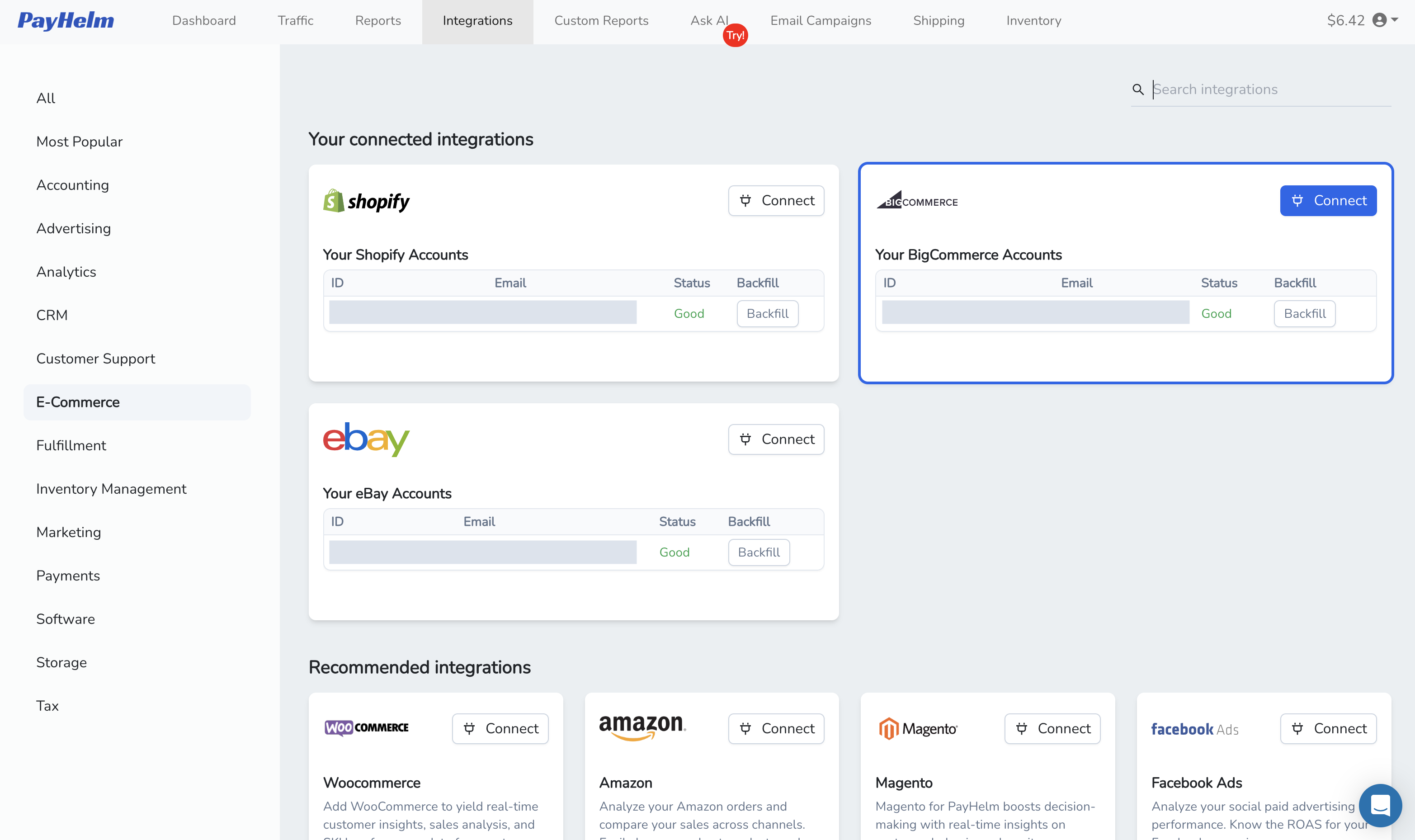
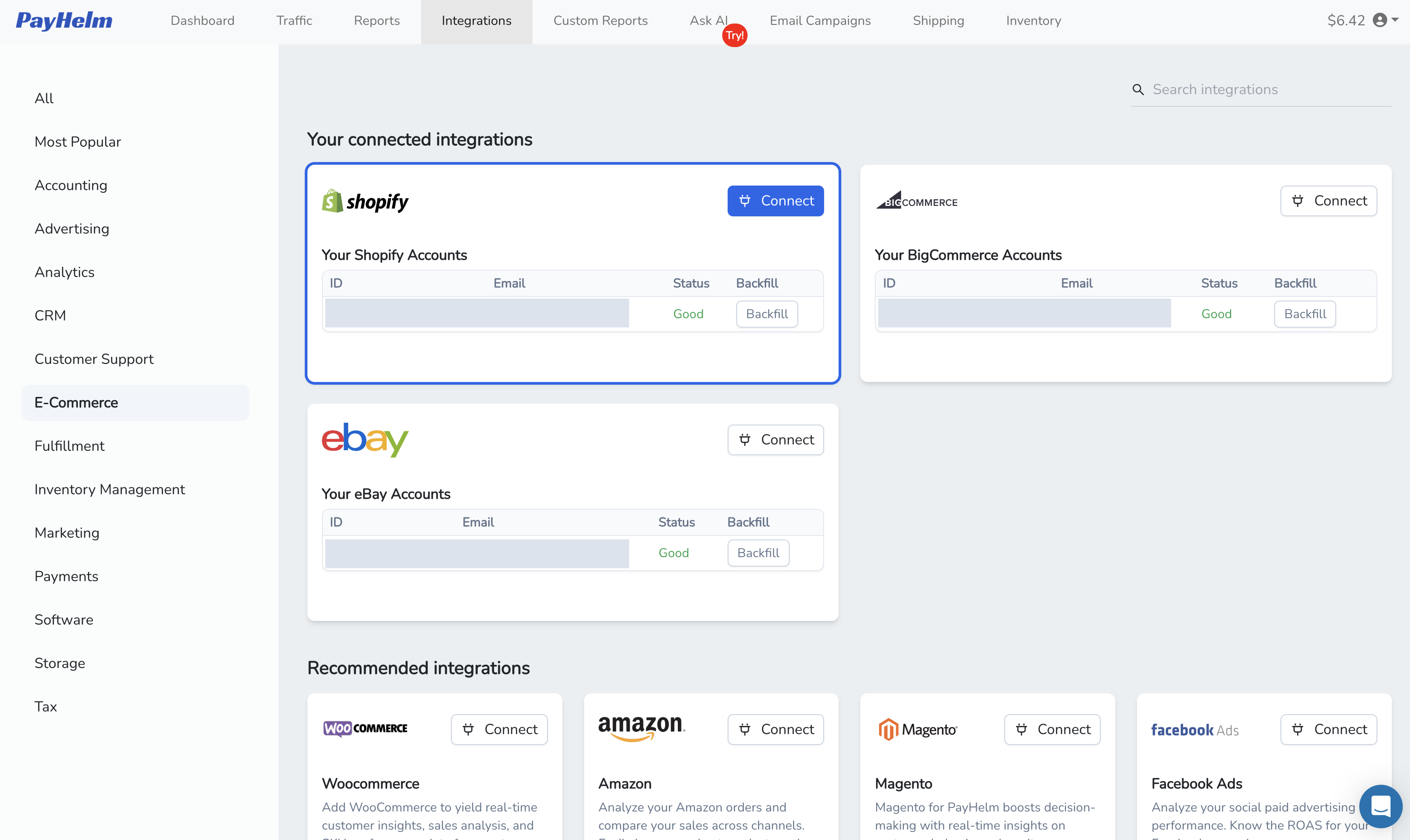
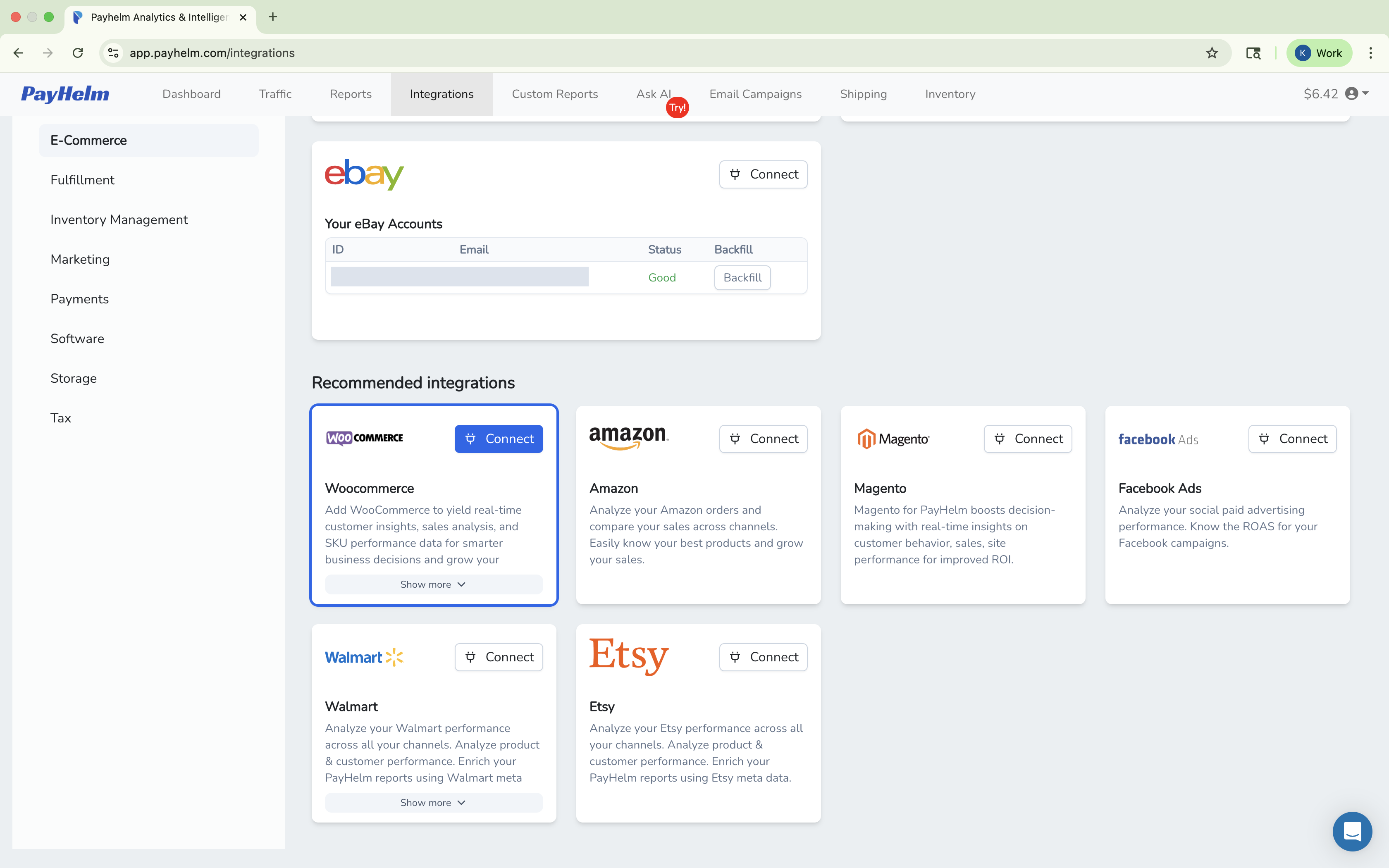
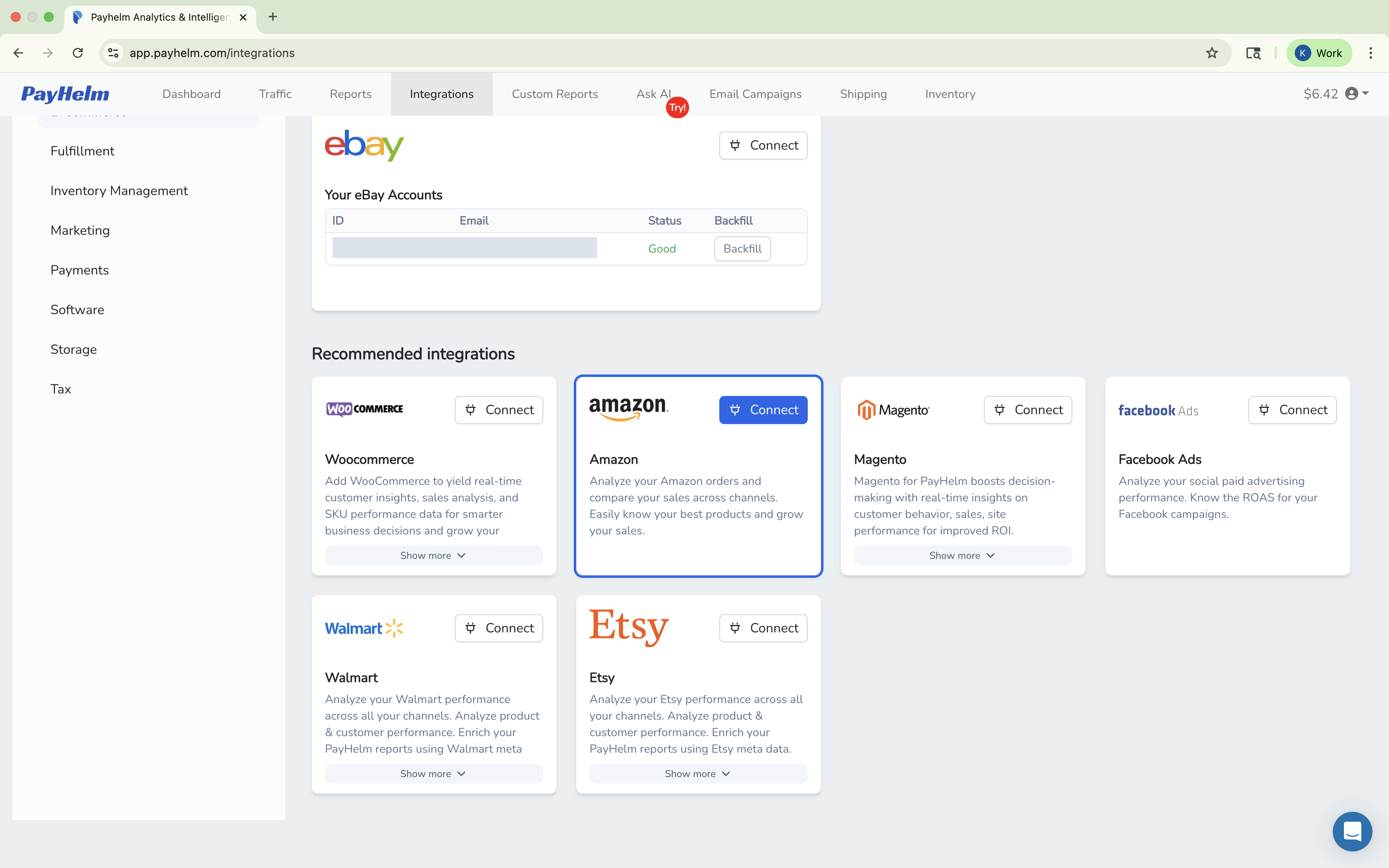
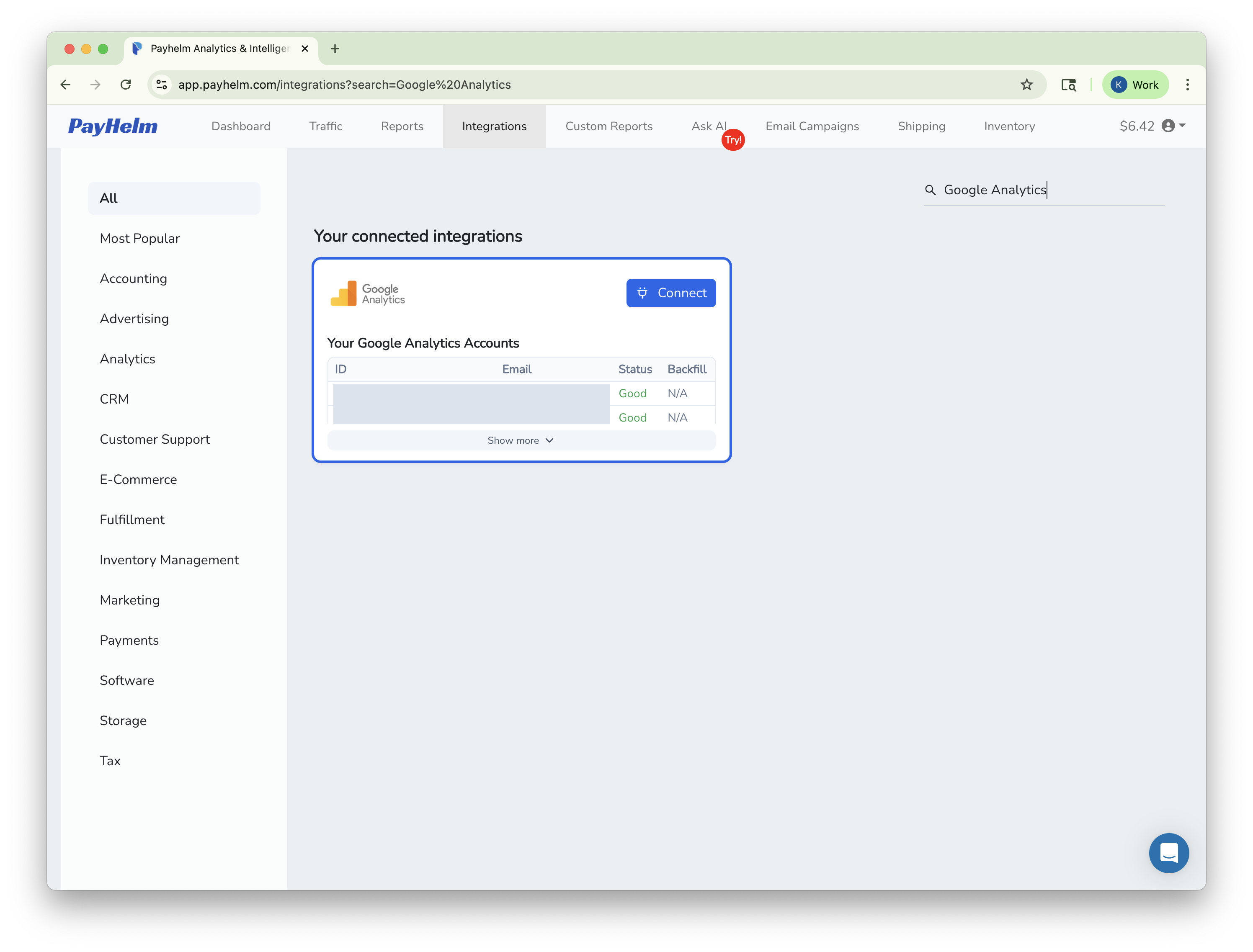
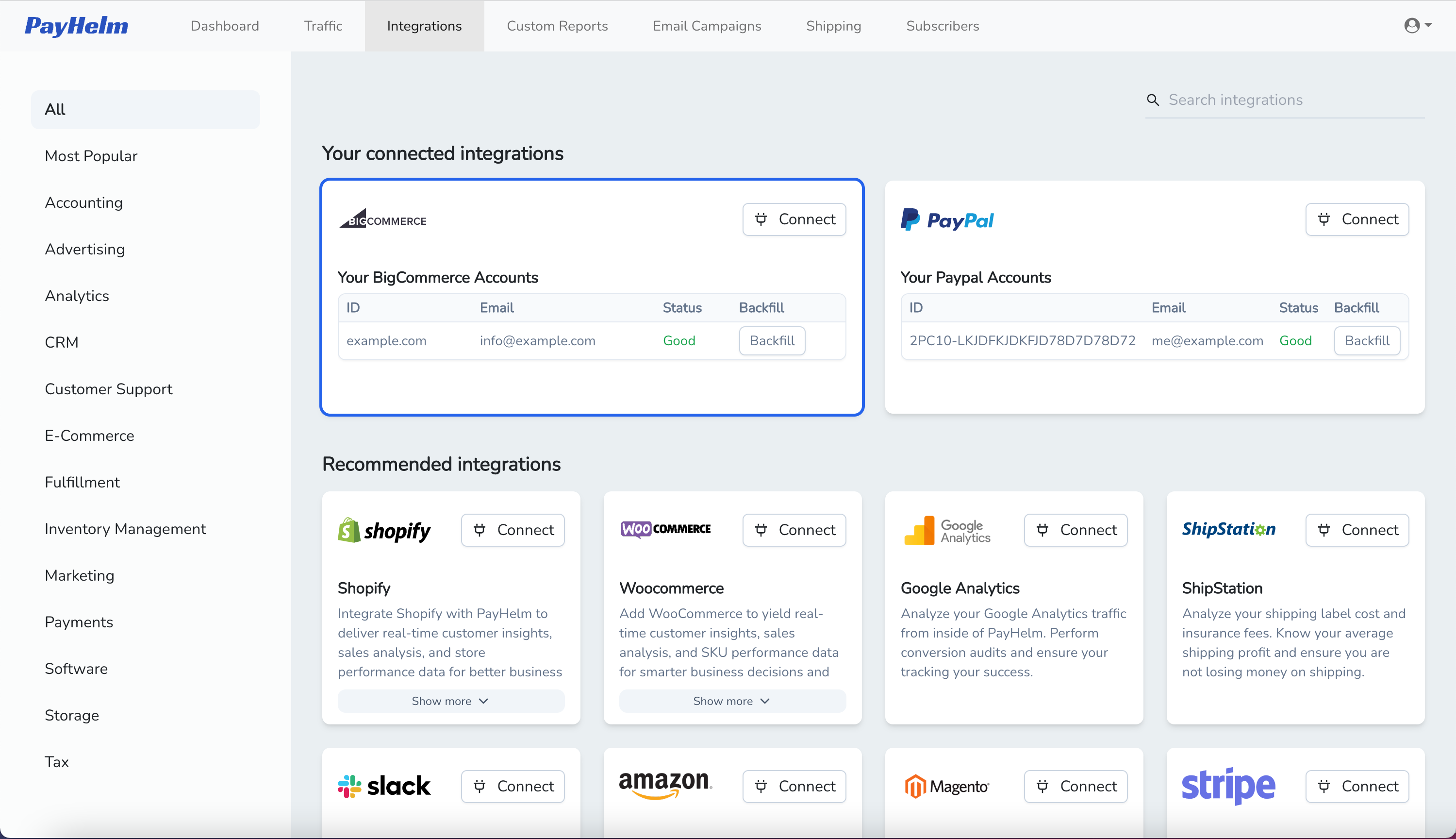
PayHelm specializes in this exact challenge, connecting Shopify reporting, BigCommerce analytics, WooCommerce reporting, Amazon analytics, and dozens of other platforms into a unified dashboard. Instead of manually gathering data from five different sources, you access real-time insights from one location.
The consolidation process involves three critical components: automated data extraction, intelligent transformation, and centralized visualization. PayHelm handles each step automatically, ensuring your team focuses on optimization rather than data preparation.

Implementation Strategy
Start with platform inventory. Document every system currently generating ecommerce data: from Shopify analytics and Amazon reporting to email marketing platforms and customer service tools. This inventory reveals the full scope of your data fragmentation challenge.
Identify data quality issues upfront. Different platforms often use conflicting naming conventions, attribution windows, and currency formats. Address these discrepancies during consolidation to prevent ongoing reporting confusion (Source: Data Quality Pro).
Establish standardized metrics definitions. Ensure conversion tracking, customer lifetime value calculations, and attribution models align across all platforms. This standardization enables accurate cross-channel analysis and performance comparisons.
PayHelm's integrations automatically handle these technical challenges, connecting with major ecommerce platforms and marketing tools without requiring extensive technical configuration.
Advanced Reporting Capabilities
Unified ecommerce analytics unlock reporting possibilities impossible with fragmented systems. Customer journey analysis becomes comprehensive when Shopify analytics, email marketing data, and social media advertising metrics combine in one view.
Real-time inventory optimization emerges when WooCommerce reporting integrates with Amazon analytics and supplier management systems. You identify trending products, predict stockouts, and optimize pricing strategies based on complete market intelligence.
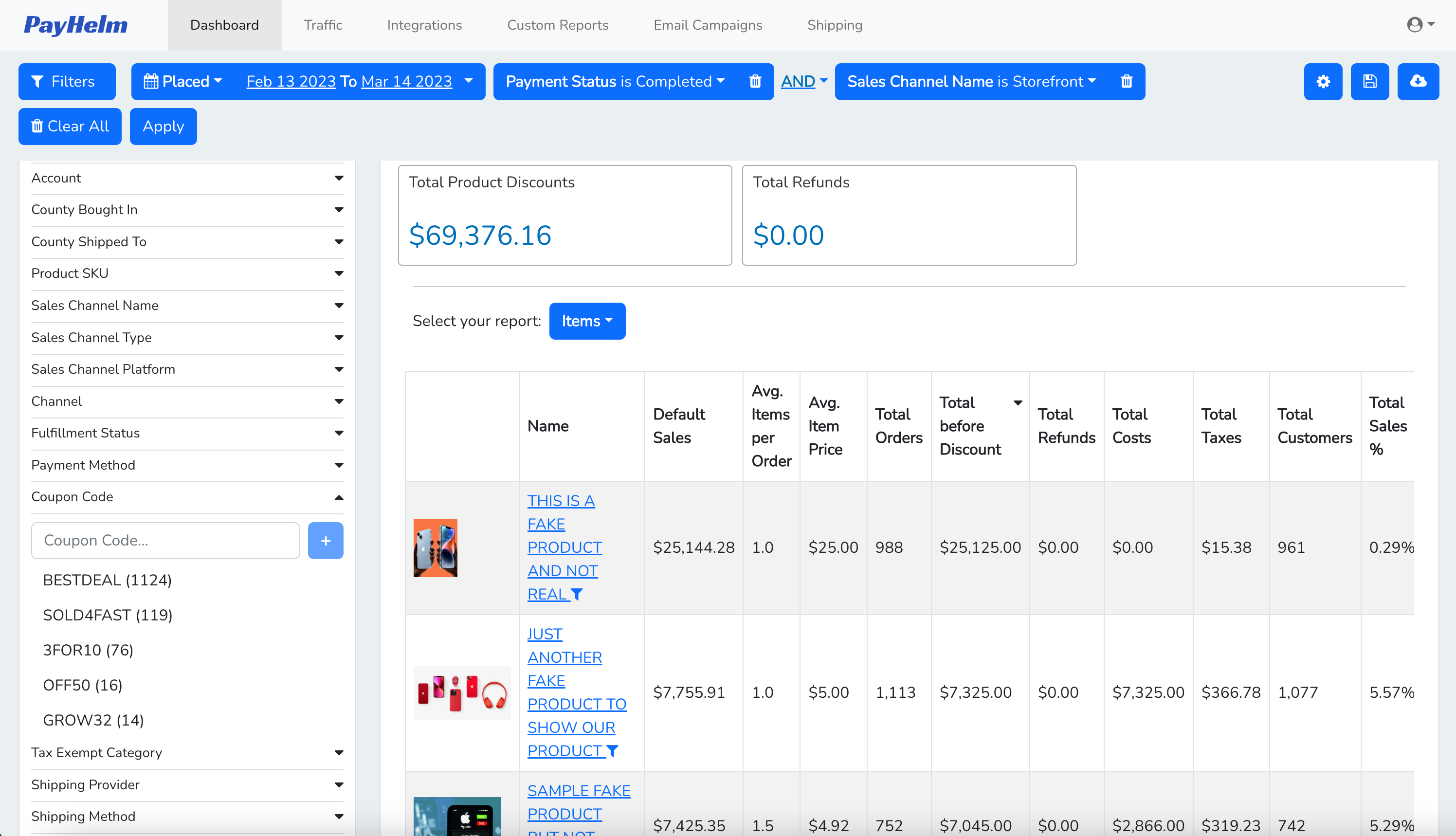
Advanced segmentation becomes possible when customer data from multiple touchpoints combines. Instead of separate BigCommerce reporting and email marketing metrics, you analyze unified customer behaviors, lifetime values, and engagement patterns.
PayHelm's features include automated anomaly detection, predictive analytics, and customizable alerting systems that monitor all connected platforms simultaneously.
Overcoming Implementation Challenges
Data migration concerns often prevent businesses from consolidating their ecommerce reporting. Modern platforms maintain historical data integrity while establishing new unified tracking systems. PayHelm preserves your existing Shopify analytics history while building comprehensive cross-platform insights.
Team adoption resistance typically stems from familiarity with existing workflows. The transition from multiple dashboards to unified reporting requires change management, but the efficiency gains quickly demonstrate value. Teams report dramatic time savings once they experience consolidated ecommerce analytics.
Technical complexity fears are addressed through platforms designed specifically for ecommerce businesses. PayHelm eliminates technical barriers by handling all integration complexity behind the scenes, requiring no coding or extensive technical knowledge.
Measuring Success
Monitor specific metrics to evaluate your unified analytics implementation success. Time to insights should decrease dramatically when teams access comprehensive data from one location instead of compiling reports from multiple sources.
Decision-making speed improves when Amazon reporting, Shopify analytics, and marketing platform data present unified recommendations rather than conflicting signals. Track how quickly your team identifies optimization opportunities after consolidation.
Data accuracy rates become measurable when discrepancies between platforms disappear. Unified ecommerce reporting eliminates the confusion created by different attribution models and data collection methods across platforms.
PayHelm customers typically report 70% reduction in reporting preparation time and significantly improved decision-making confidence within the first month of implementation.
Scaling Considerations
As your ecommerce business expands into new channels, unified analytics becomes even more critical. Adding TikTok advertising, new marketplace integrations, or international expansion creates additional data fragmentation without proper consolidation infrastructure.
Plan for growth by selecting analytics platforms that scale with your business. PayHelm supports unlimited platform connections and automatically adapts to new integrations as your ecommerce ecosystem evolves.
Consider team structure changes that unified reporting enables. When data preparation time decreases, analytics professionals can focus on strategic analysis, optimization, and growth initiatives rather than manual reporting tasks.
Taking Action
Stop accepting dashboard juggling as a necessary part of ecommerce management. The technology to unify your Shopify reporting, Amazon analytics, WooCommerce data, and all other platforms exists now and delivers immediate productivity improvements.
Evaluate your current reporting workflow honestly. Calculate time spent switching between platforms, reconciling discrepancies, and manually creating reports. This represents your opportunity cost: resources that could drive growth instead of managing data fragmentation.

Modern ecommerce businesses require modern analytics infrastructure. Unified reporting isn't a luxury: it's a competitive necessity that enables faster decisions, better customer experiences, and more effective resource allocation.
Explore how PayHelm transforms ecommerce reporting chaos into streamlined business intelligence. Book a demo to see unified analytics in action, or review our customer success stories to understand the transformation unified reporting delivers for businesses just like yours.