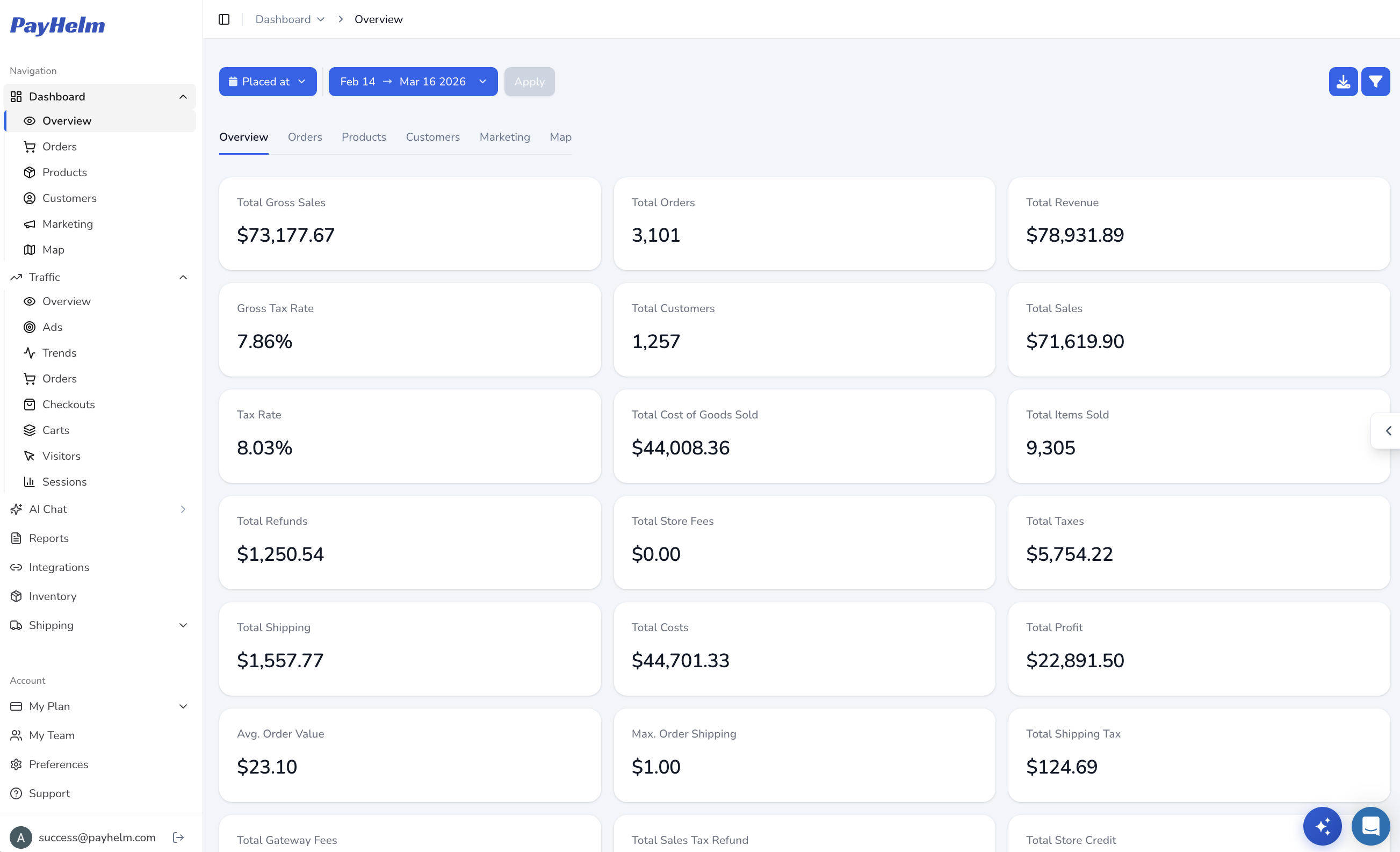
The short versionPayHelm vs Metorik: two different centers of gravity
Both products can be relevant to ecommerce reporting, but the decision often turns on data architecture, the channels that matter and the workflow after someone spots a change. Start by mapping those requirements, then compare the current product and package details.
Keep WooCommerce depth while deciding how much of the business to combine
Metorik is closely associated with WooCommerce reporting, and its product scope includes real-time reports, segments, subscription analytics and Engage email functionality. It also supports Shopify, but billing is organized by platform: a WooCommerce and Shopify store cannot simply be treated as one mixed-platform subscription. Order counts are averaged over a three-month period for pricing, so seasonal volume should be considered before comparing headline tiers.
PayHelm approaches the question from the other direction: bring supported store and marketplace sources into one analytics workspace. A WooCommerce merchant that also operates Shopify, BigCommerce, Amazon or Walmart can evaluate whether those sources and their available history answer cross-channel questions. PayHelm provides email marketing analytics, but it is not a standalone email sending or Engage replacement. If an email platform sends abandoned-cart messages or automations, preserve that system or rebuild the flows before changing tools.
Be careful with feature parity claims. PayHelm’s WooCommerce plugin is available through its WooCommerce integration path, but setup and data coverage should be checked for the site and connector configuration. WooCommerce Subscriptions support in PayHelm has not been confirmed here, so subscription reporting needs a direct validation. Metorik’s listed subscription analytics and email tools may be central dependencies for some stores; make them explicit in the evaluation checklist.
Capabilities vary by plan, connector and package. Confirm the data fields, definitions and access you need before deciding.