Integrations
Connect Any App to PayHelm: Send Data via Zapier Webhooks
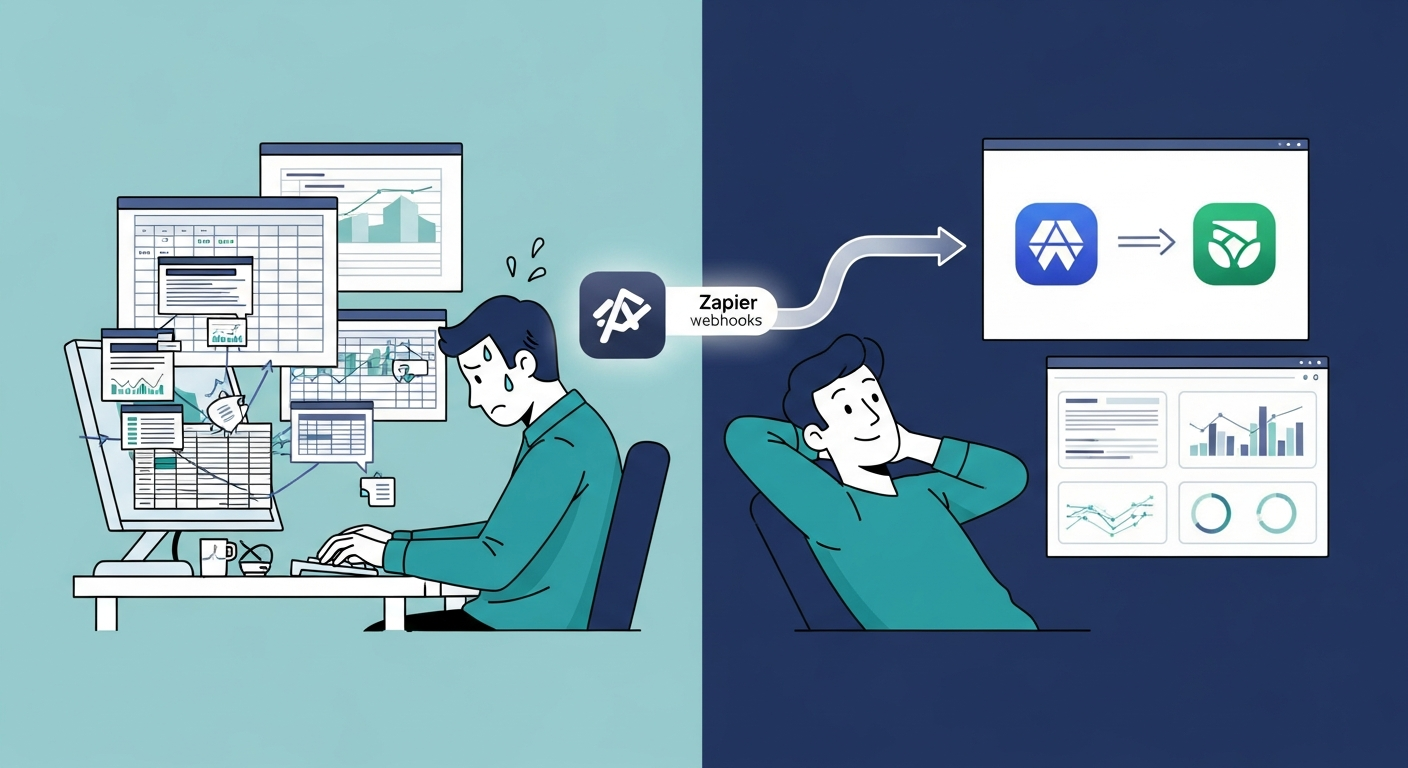
PayHelm now accepts data from over 7,000 apps through Zapier webhooks. No custom code, no dev sprint — just an API key and a webhook. Here's exactly how to set it up.
Hitting $1M in revenue is huge, but scaling past it requires a completely different approach to data. Real-time ecommerce reporting is the difference between businesses that plateau and those that rocket past $50M.

Hitting $1 million in annual revenue is a massive milestone for any ecommerce business. But here's the thing: scaling past that point requires a completely different approach to data and reporting. Traditional analytics that worked when you were doing $250k or $500k suddenly become your biggest bottleneck.
Real-time ecommerce reporting isn't just a nice-to-have anymore. It's the difference between businesses that plateau and those that rocket past $50M. Companies using real-time analytics see up to 30% boost in sales and 20% better customer retention rates (Source: Ecommerce Analytics Report).
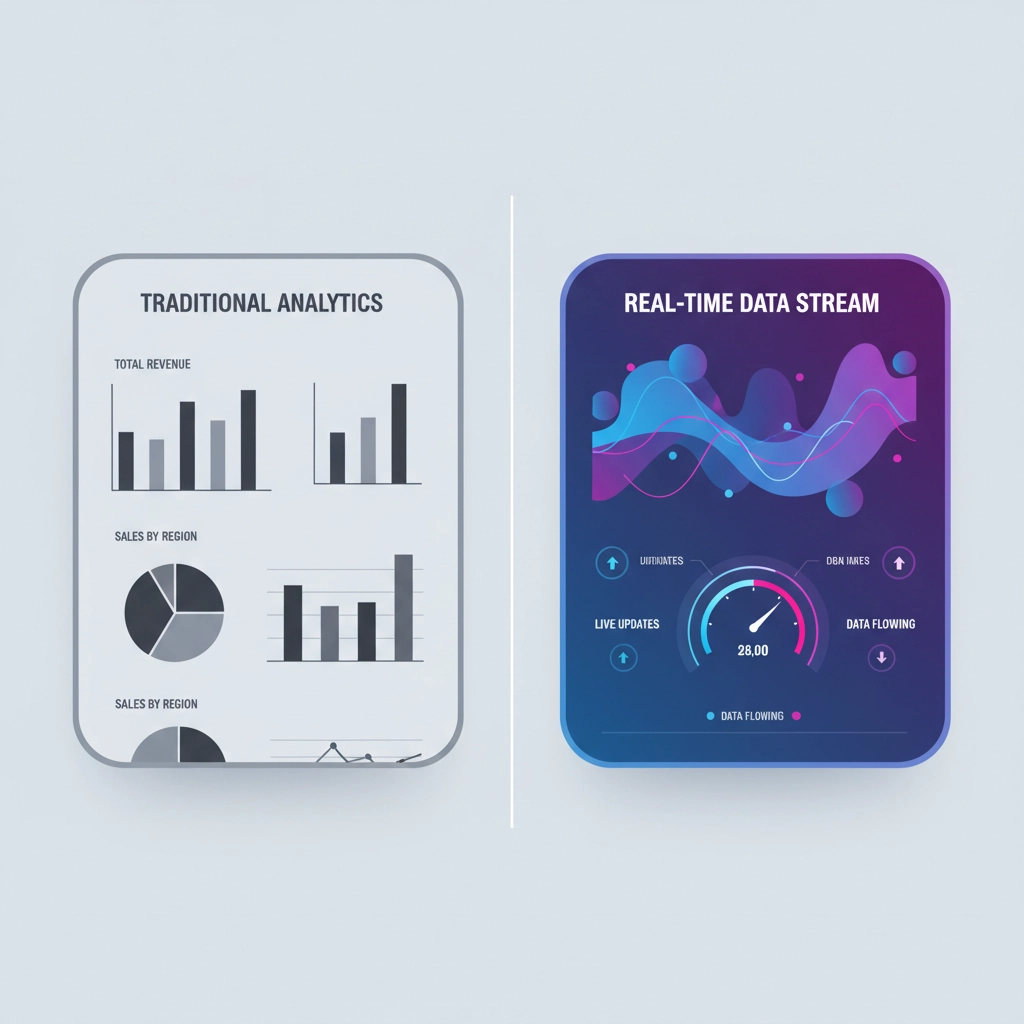
When you're operating at $1M+, every minute of delayed insights costs money. Traditional analytics might tell you yesterday's conversion rates, but real-time ecommerce analytics shows you what's happening right now: allowing you to fix problems before they snowball.
The speed difference is game-changing. Real-time systems update every few seconds or minutes, while traditional analytics can lag by hours or even days (Source: Analytics Performance Study). At scale, this delay means missing flash sale opportunities, failing to catch checkout issues, or losing customers due to inventory problems you could have solved instantly.
For Shopify analytics, BigCommerce analytics, and WooCommerce analytics, real-time capabilities vary significantly. Shopify reporting offers decent real-time features through Shopify Analytics, but many businesses find they need additional tools for comprehensive coverage. BigCommerce reporting provides solid real-time insights, particularly for inventory management. WooCommerce reporting often requires third-party plugins to achieve true real-time capabilities.
Revenue Metrics That Matter
Your gross profit margin shows exactly how much revenue remains after covering product costs: critical for maintaining profitability during rapid scaling (Source: Scaling Ecommerce Study). Track this in real-time to catch margin erosion before it impacts your bottom line.
Net profit margin gives you the complete picture by accounting for all expenses. At $1M+, this metric needs constant monitoring because small percentage changes translate to huge dollar impacts.
Customer Economics
Customer Acquisition Cost (CAC) becomes increasingly important as you scale. Real-time CAC tracking across channels helps you shift budget instantly to high-performing campaigns. Customer Lifetime Value (CLV) shows which customer segments drive long-term growth: remember, acquiring new customers costs 5-7 times more than retaining existing ones (Source: Customer Economics Research).
The Marketing Efficiency Ratio (MER): total revenue divided by total marketing spend: indicates whether your growth is sustainable. Track this real-time across all channels including Amazon analytics to avoid burning through resources inefficiently.

Shopify Analytics Optimization
Shopify's built-in analytics provide solid baseline reporting, but scaling past $1M typically requires enhanced shopify reporting capabilities. Focus on real-time inventory alerts, conversion funnel tracking, and customer behavior analysis. Many successful $1M+ Shopify stores integrate additional analytics tools to fill gaps in native reporting.
BigCommerce Analytics Advantages
BigCommerce reporting excels in B2B scenarios and complex product catalogs. The platform's real-time inventory management and abandoned cart recovery tools become crucial at scale. Leverage BigCommerce analytics for detailed customer segmentation and personalized marketing campaigns.
WooCommerce Analytics Customization
WooCommerce's flexibility allows for highly customized analytics setups, but requires more technical expertise. WooCommerce reporting can be enhanced with plugins like Google Analytics Enhanced Ecommerce and specialized analytics tools. Focus on real-time order processing, inventory management, and customer journey tracking.
Amazon Analytics Integration
Amazon reporting provides crucial insights for multi-channel sellers. Real-time Amazon analytics help optimize listings, manage advertising spend, and track competitor movements. Integration with other platform analytics creates a unified view of multi-channel performance.
Data Frequency Strategy
Not all metrics need real-time monitoring. Implement a tiered approach (Source: Real-Time Analytics Implementation Guide):
Critical Alert Systems
Set up intelligent alerts for metrics that require immediate action. Stock-outs, payment gateway failures, and unusual traffic patterns need instant notification. Configure alerts to escalate based on severity and business impact.

Supply Chain Optimization
At $1M+, supply chain efficiency directly impacts profitability. Real-time inventory tracking prevents stockouts and overstock situations. Integrate with fulfillment partners for end-to-end visibility. Whether using in-house fulfillment, 3PL services, or hybrid models, real-time data drives better decision-making (Source: Supply Chain Analytics Report).
AI-Powered Forecasting
Leverage artificial intelligence for demand forecasting based on real-time sales data, seasonality, and market trends. This prevents costly inventory mistakes that become exponentially more expensive at scale.
Dynamic Pricing Strategies
Real-time competitive intelligence and demand signals enable dynamic pricing strategies. Monitor competitor pricing, inventory levels, and market conditions to optimize pricing automatically.
Retention Through Real-Time Personalization
Real-time customer behavior data enables sophisticated personalization that adapts instantly to user preferences. Track browsing patterns, purchase history, and engagement levels to deliver relevant experiences. This is particularly effective for Shopify analytics and BigCommerce analytics platforms with strong personalization capabilities.
Loyalty Program Optimization
Use real-time data to identify at-risk customers and trigger personalized retention campaigns. Monitor loyalty program performance and adjust rewards based on customer behavior patterns.

Subscription Model Analytics
For subscription-based ecommerce businesses, real-time churn prediction becomes critical. Track engagement metrics, usage patterns, and payment behaviors to proactively address retention issues.
Dashboard Customization
Create role-specific dashboards that surface relevant metrics quickly. Executives need high-level KPIs, while operations teams require granular performance data. Ensure mobile accessibility for real-time monitoring anywhere (Source: Dashboard Optimization Study).
Data Quality Management
Establish data governance protocols to maintain accuracy across all real-time reporting systems. Regular auditing and validation processes ensure decision-making based on reliable data.
Integration Strategy
Connect all platforms: Shopify, BigCommerce, WooCommerce, Amazon, and other channels: into a unified analytics ecosystem. This provides a single source of truth for business performance across all channels.
Predictive Analytics
Move beyond reactive reporting to predictive insights. Use historical data patterns to forecast future trends, identify growth opportunities, and prevent potential issues before they impact revenue.
Customer Journey Analytics
Map complete customer journeys across all touchpoints. Real-time journey analytics reveal optimization opportunities that traditional funnel analysis misses.

A/B Testing at Scale
Real-time analytics enable rapid A/B testing cycles. Test pricing strategies, product presentations, checkout processes, and marketing messages with immediate feedback on performance impact.
Performance Benchmarking
Establish industry benchmarks and continuously measure performance against competitors. Real-time competitive intelligence keeps you ahead of market trends and opportunities.
ROI Measurement
Track return on investment for all initiatives in real-time. This enables rapid resource reallocation toward high-performing strategies and away from underperforming investments.
Scaling past $1M requires treating data as a strategic asset, not just operational reporting. Real-time ecommerce reporting becomes the central nervous system enabling rapid response and continuous optimization across all business areas.
Success depends on three interconnected focus areas: financial discipline through precise metric tracking, operational efficiency through automated systems, and customer-focused strategies that maximize lifetime value. Real-time reporting connects these areas and enables the speed of decision-making required for sustainable growth.
Ready to transform your ecommerce analytics strategy? Discover how PayHelm's real-time reporting capabilities can accelerate your journey to $1M and beyond.
This powerful feature expands your analytical capabilities, allowing you to create custom metrics that align perfectly with your business objectives.
Access this feature through the Analytics section of your PayHelm dashboard. Our intuitive interface makes it easy to create and deploy custom calculations.
Connect these platforms with PayHelm to get unified analytics and insights
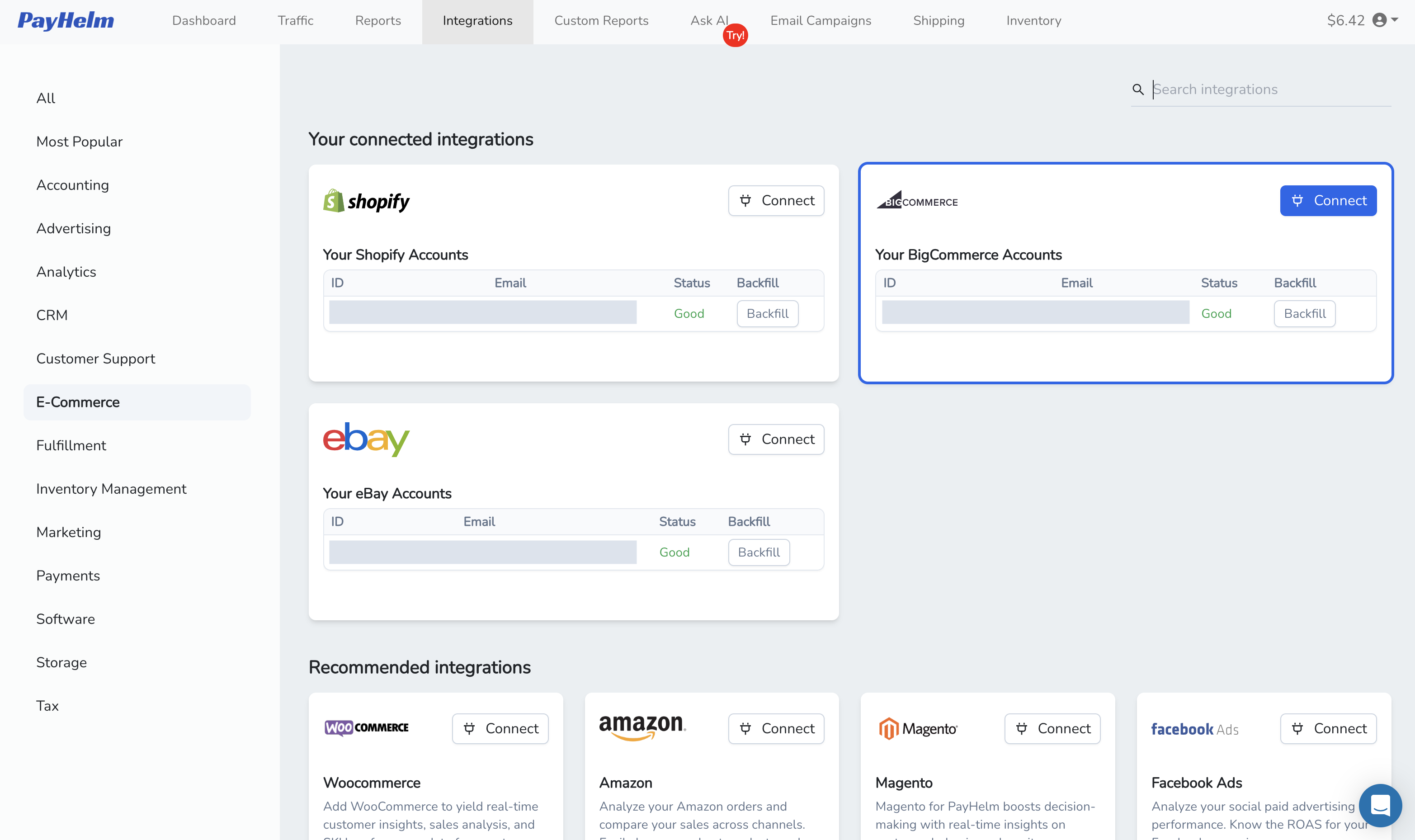
PayHelm for BigCommerce creates customer insights, sales analysis, and product performance data for informed decisions and improved ROI
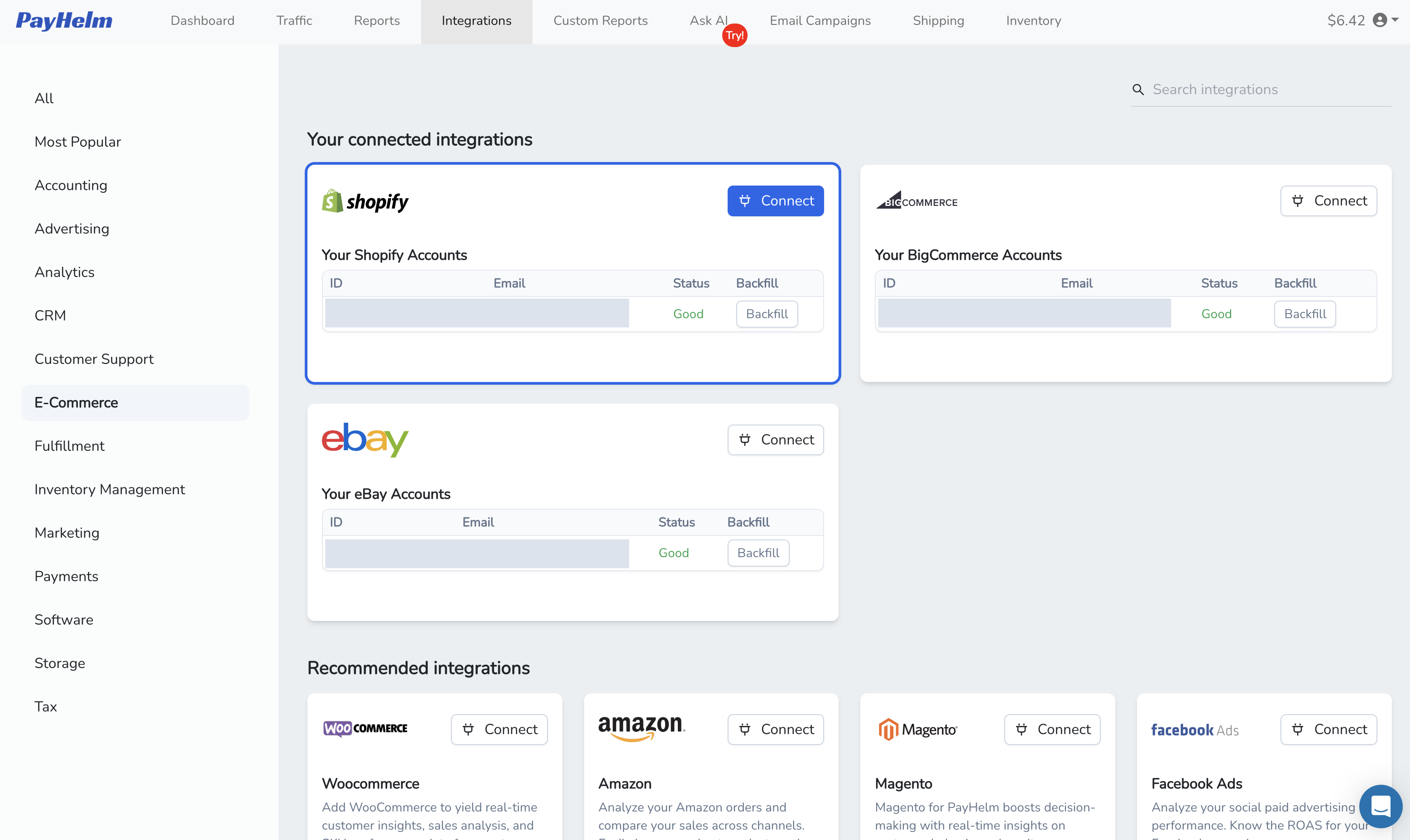
Integrate Shopify with PayHelm to deliver real-time customer insights, sales analysis, and store performance data for better business decisions and ROI
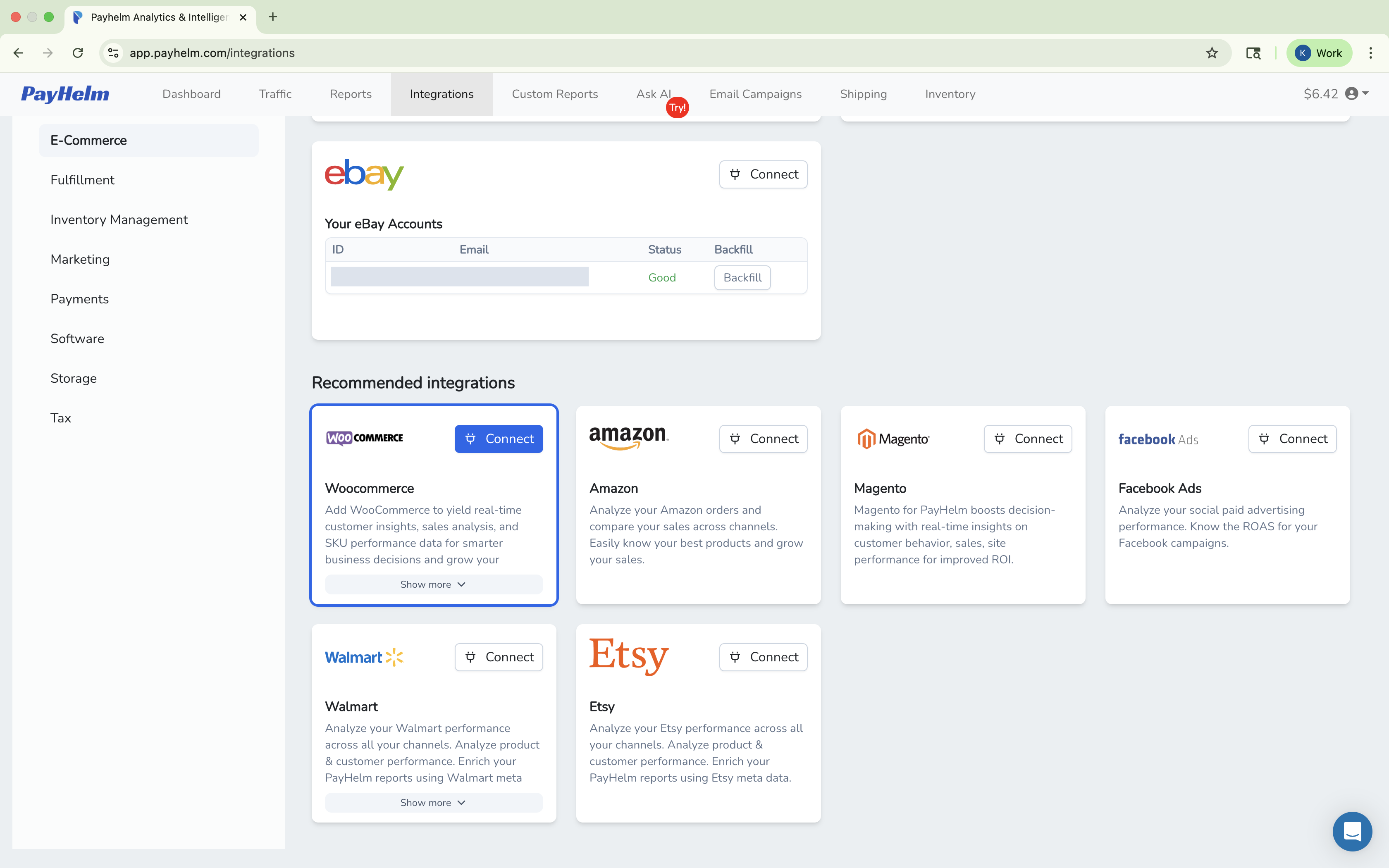
Add WooCommerce to yield real-time customer insights, sales analysis, and SKU performance data for smarter business decisions and grow your business
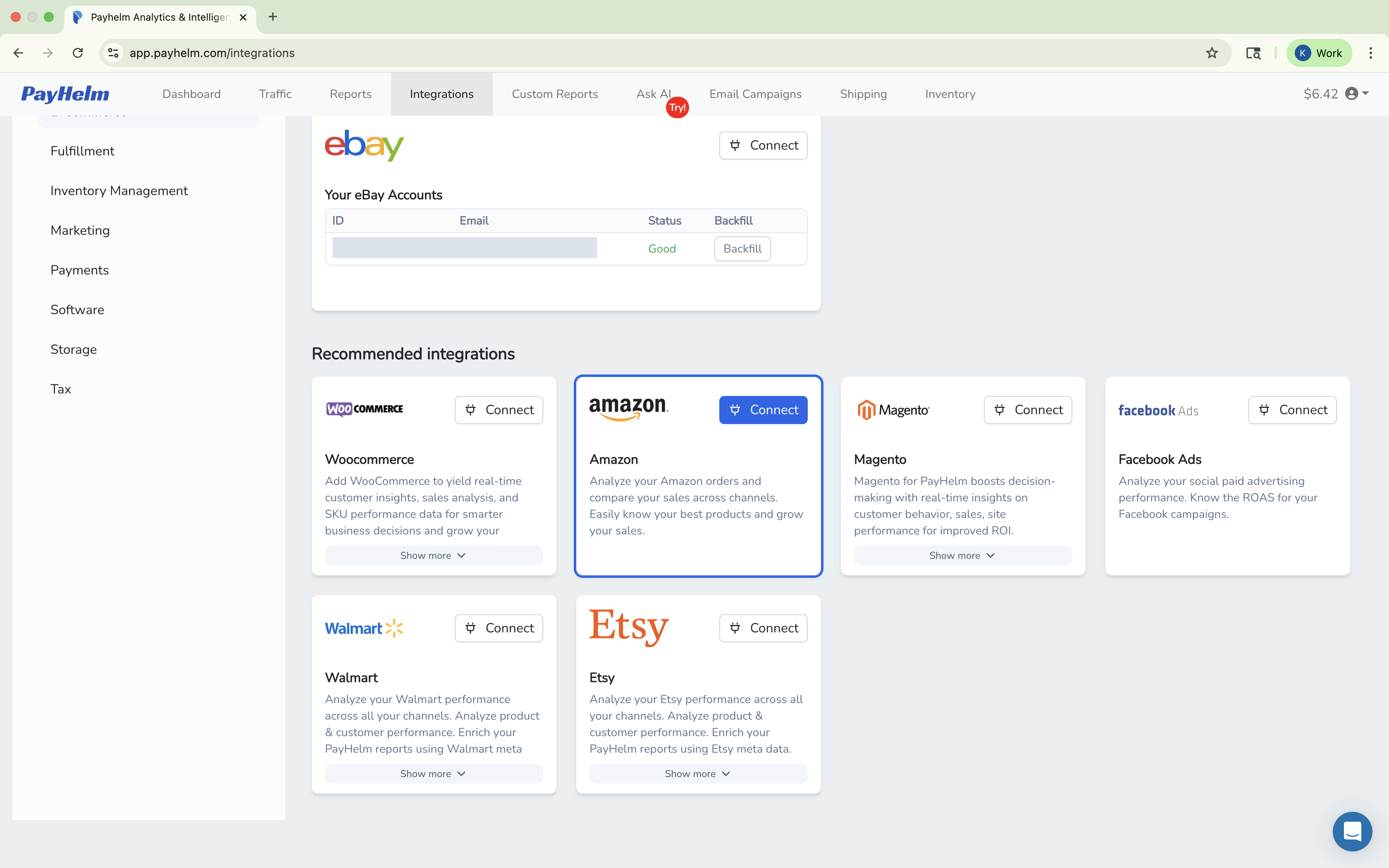
Analyze your Amazon orders and compare your sales across channels
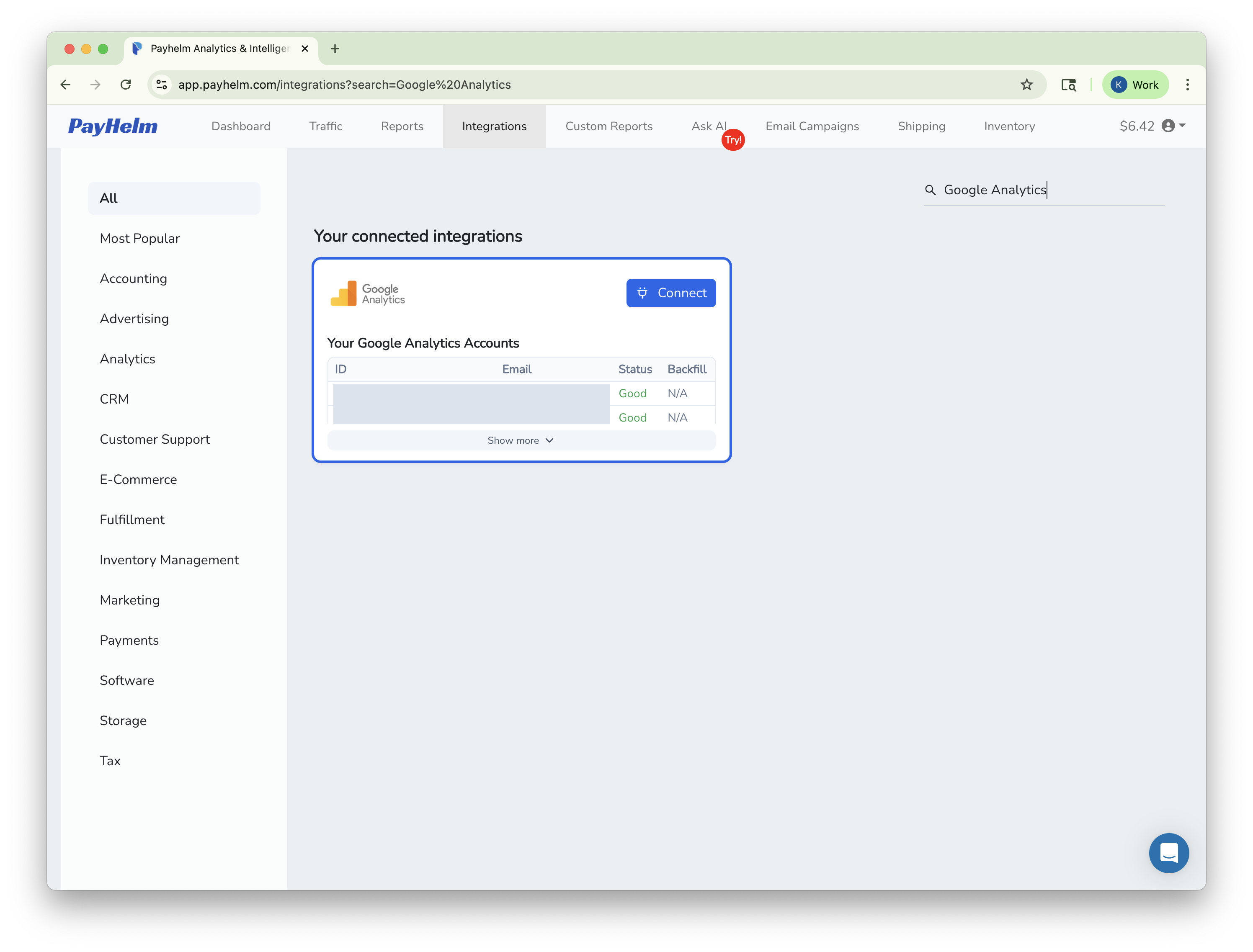
Integrate Google Analytics with PayHelm for comprehensive website and ecommerce performance insights
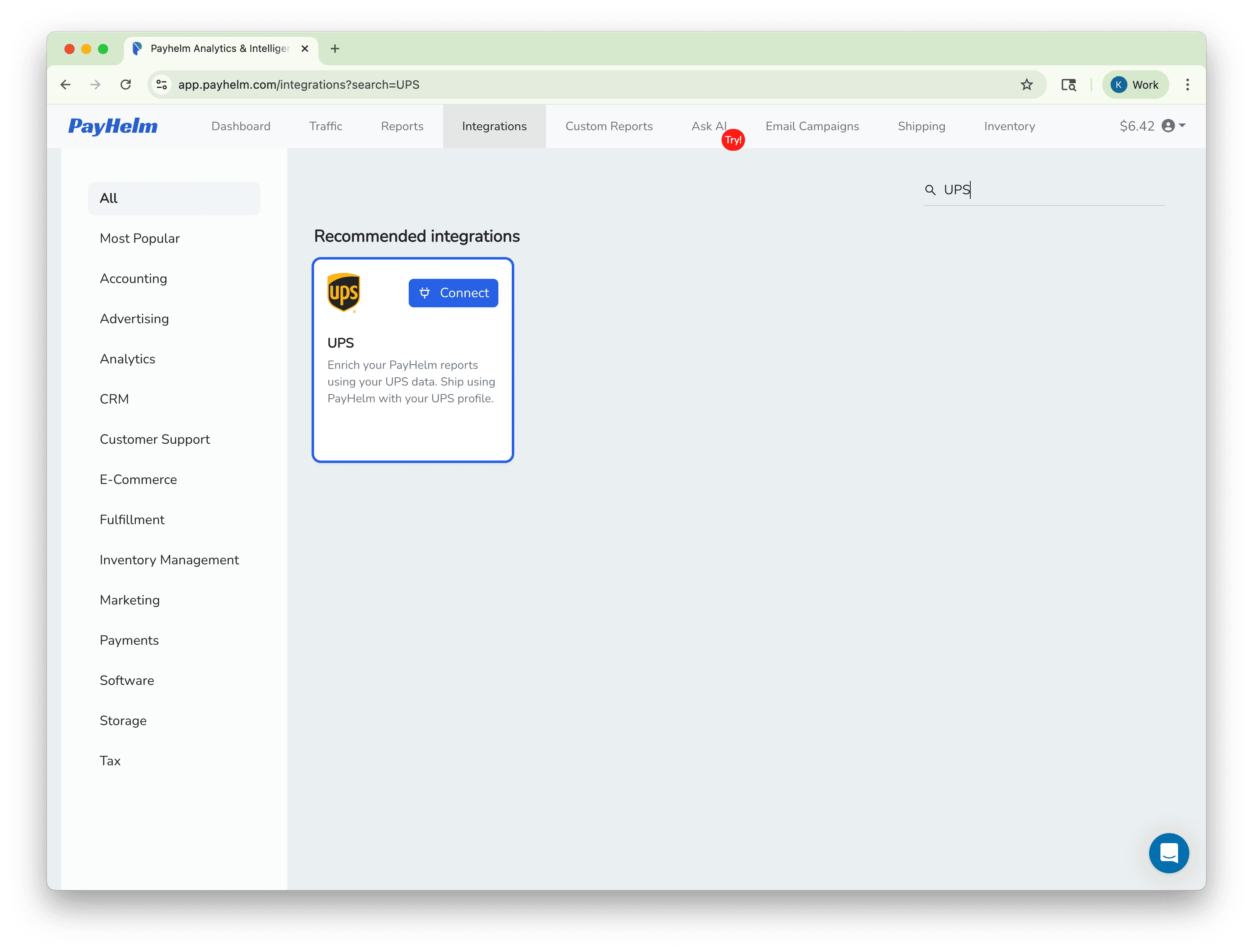
Analyze UPS shipping performance, costs, and delivery metrics for logistics optimization
Let an AI agent handle these tasks for you — automatically, on a schedule.
Catch budget anomalies the same day they start — not when your monthly statement arrives.
Identify your highest-value customers every week and make sure they get VIP treatment.
Find the pages where your marketing investment is landing but not converting.